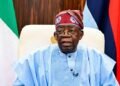
President Bola Tinubu expressed strong support for the newly created Global Alliance Against Hunger and Poverty at the opening session of the 19th G20 Leaders Summit in Rio de Janeiro, Brazil, an initiative championed by Brazilian President Luiz Inácio Lula da Silva.

Tinubu described the alliance as a “bold and visionary step” to address two of the world’s most pressing challenges.
“This bold initiative underscores Brazil’s leadership in addressing urgent and persistent global issues.
The Alliance marks a milestone in our collective efforts to eradicate hunger and poverty while fostering collaboration among governments, international organizations, and civil society,” Tinubu said.
The Nigerian president compared the initiative to one of the eight priority areas he outlined at his inauguration, reaffirming Nigeria’s commitment to adopting global best practices to advance its economic development.
Nigeria’s endorsement of the alliance, Tinubu noted, is a significant step towards achieving Sustainable Development Goals (SDGs) 1 (eradicating poverty) and 2 (zero hunger).
“By joining this initiative, Nigeria aims to leverage international cooperation, best practices, and financial resources to enhance domestic strategies for combating poverty and hunger,” he added.
Tinubu also reiterated Nigeria’s readiness to take a leading role in global efforts for sustainable development, emphasizing the nation’s dedication to improving the quality of life for its citizens.
President Tinubu seized the opportunity to advocate for reforms to the United Nations Security Council, urging the G20 to champion expanded representation for Africa.
“The Security Council must expand its permanent and non-permanent membership categories to reflect the world’s diversity and plurality.
Africa deserves priority in this process, with two permanent seats allocated to it.
Nigeria stands ready to represent Africa in this capacity,” Tinubu declared.
Tinubu commended the G20 for admitting the African Union as a permanent member, calling it a “forward-looking step toward reform-minded multilateralism.”
He emphasized the importance of inclusive global governance, especially in addressing challenges like inequality, climate change, terrorism, and economic disparities.
Highlighting the inequities in the international financial system, Tinubu urged the G20 to support reforms to create a fairer global tax framework.
He pointed to Nigeria’s role, alongside other African states, in championing a United Nations framework for a more equitable global tax system.
“The current tax system favors affluent nations, particularly in taxing digital economies, leading to significant revenue losses for developing countries and undermining sustainable development,” Tinubu said.
He also called for a revamp of multilateral institutions to address trade imbalances and improve access to capital markets for the Global South.
“Bridging the gap between the Global North and South is a path the G20 must lead,” he asserted.
Concluding his remarks, Tinubu reaffirmed Nigeria’s dedication to the G20’s mission and the 2030 SDG targets.
“Nigeria is committed to being part of a future that prioritizes equity, sustainable development, and global collaboration through active participation in the G20,” he said.
Tinubu’s statements were delivered on his behalf by Minister of Foreign Affairs Ambassador Yusuf Tuggar, underscoring Nigeria’s active engagement in shaping global policies at the summit.