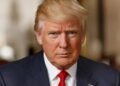
US President Donald Trump has issued a fresh ultimatum to impose tariffs on the European Union (EU), China, Canada, and Mexico by February 1. The move is aimed at addressing trade imbalances and curbing the influx of fentanyl into the United States.

Tariffs to Address Trade Deficit and Drug Crisis
Speaking at the White House, Trump outlined his administration’s plan to implement a 10% punitive duty on Chinese imports and a 25% tariff on goods from Canada and Mexico. He accused the EU of unfair trade practices and described tariffs as the only path to “fairness.”
“The European Union is very, very bad to us,” Trump stated. “So they’re going to be in for tariffs. It’s the only way … you’re going to get fairness.”
The president also linked the proposed tariffs to the ongoing fentanyl crisis, claiming that precursor chemicals for the drug are entering the US through Canada and Mexico.
White House Adviser Supports Tough Stance
White House trade adviser Peter Navarro echoed Trump’s concerns, emphasizing the administration’s commitment to addressing the opioid epidemic.
“The reason why he’s considering 25, 25, and 10 (percent), or whatever it’s going to be, on Canada, Mexico, and China, is because 300 Americans die every day from fentanyl overdoses,” Navarro said.
In addition to tariffs, the administration is exploring other measures, including a global supplemental tariff and potential changes to the $800 de minimis duty-free exemption for low-value shipments.
Immigration Crackdown and Broader Reforms
Trump also announced a sweeping immigration crackdown, including a broad ban on asylum seekers, as part of his broader strategy to tackle drug trafficking and illegal migration.
Market Reaction and Expert Analysis
While markets initially responded positively to Trump’s measured approach to tariffs—sending the S&P 500 index to its highest level in a month—experts cautioned against the potential economic fallout of escalating trade tensions.
“He’s figuring out how to best use his leverage to get what he wants,” said William Reinsch, a trade expert at the Center for Strategic and International Studies. “Trump likely decided to go a little slower and also to make sure he has as firm a legal foundation as he can get for these kinds of actions.”
International Response
Mexico and Canada have taken a conciliatory stance in response to Trump’s February 1 deadline. Mexican President Claudia Sheinbaum underscored her country’s sovereignty and commitment to responding “step by step” to US actions.
However, Sheinbaum firmly stated that the US-Mexico-Canada Agreement (USMCA) would not be renegotiated before 2026.
Looking Ahead
As the February 1 deadline approaches, the international community is bracing for potential disruptions in trade relations. While Trump’s tough rhetoric has drawn criticism, his administration remains steadfast in using tariffs as a tool to address long-standing challenges in trade and drug trafficking.