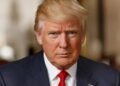
The United States Agency for International Development (USAID), once the cornerstone of American global humanitarian aid, has been formally dissolved following a gradual phase-out initiated during President Donald Trump’s administration.

As of March, over 80% of the agency’s programmes had been terminated, and on Tuesday, the remaining functions were officially absorbed into the U.S. State Department.
Founded in 1961, USAID had grown to employ around 10,000 staff, two-thirds of whom worked overseas, according to the Congressional Research Service. It was widely regarded as the largest provider of foreign aid globally.
The dismantling of USAID has drawn sharp criticism from both Democratic and Republican figures, including former Presidents Barack Obama and George W. Bush, who warned of severe humanitarian consequences.
In a joint virtual event with global aid workers and longtime humanitarian advocate Bono, Bush highlighted the legacy of a USAID-backed HIV/AIDS programme launched during his administration, credited with saving 25 million lives.
“You’ve showed the great strength of America through your work — and that is your good heart,” Bush said in a recorded message. “Is it in our national interest that 25 million people who would have died now live? I think it is, and so do you.”
Obama, equally vocal, described the agency’s closure as devastating. “Gutting USAID is a travesty, and it’s a tragedy. Because it’s some of the most important work happening anywhere in the world,” he stated.
Bono, addressing USAID staff and aid partners, lamented the loss. “They called you crooks, when you were the best of us,” he said.
A study published in The Lancet medical journal projected that the widespread aid cuts could result in over 14 million additional deaths by 2030 — one-third of them children. The researchers described the figures as “staggering.”
A spokesperson for the State Department, however, challenged the report, telling AFP that the study was based on “incorrect assumptions.” The official assured that the U.S. would continue to provide aid, but “in a more efficient way.”
The agency’s closure follows years of gradual rollbacks. Significant cuts began early in Trump’s second term, with billionaire and former presidential adviser Elon Musk tasked with reducing the federal workforce. The decision sparked widespread condemnation from international humanitarian groups.
Programmes reportedly scrapped included initiatives to provide prosthetics for injured Ukrainian soldiers, demining operations in conflict zones, and efforts to curb Ebola outbreaks in Africa.
On Wednesday, USAID’s official website still carried a notice stating that all direct-hire personnel had been placed on administrative leave as of February 23.
U.S. Secretary of State Marco Rubio confirmed that the remaining 1,000 aid programmes would now fall under his department’s oversight.
“This era of government-sanctioned inefficiency has officially come to an end,” Rubio declared. “Under the Trump Administration, we will finally have a foreign funding mission in America that prioritizes our national interests,” he added in a post on Substack.
Trump has long advocated for a foreign policy aligned with his “America First” doctrine, calling for reduced overseas spending and tighter control over foreign assistance.
The closure of USAID has also triggered ripple effects internationally, with the UK, France, and Germany initiating their own aid budget reductions. The United Nations recently described the situation as “the deepest funding cuts ever to hit the international humanitarian sector.”
USAID’s legacy, shaped over more than six decades, now hangs in the balance as global partners grapple with the fallout from its closure.