President Bola Tinubu has called on Brazilian energy giant, Petrobras, to revive its operations in Nigeria, describing the company’s return as critical to unlocking the country’s vast gas potential and boosting economic growth.

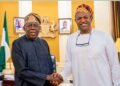
Speaking at the Planalto Palace in Brasília on Monday after a bilateral meeting with Brazilian President Luiz Inácio Lula da Silva, Tinubu said the invitation to Petrobras was central to a renewed wave of Nigeria–Brazil cooperation.
“We have the largest deposit of gas.
I don’t see why Petrobras will not be back in Nigeria as soon as possible. And I appreciate President Lula promising that that will be done as soon as possible,” he said.
Tinubu acknowledged that past challenges had slowed bilateral ties but declared that “era” over.
“We’ve allowed some problems, inactivities and the past to deter worries, a progress and a promise. But today we say that is the end of that,” he said.
Highlighting Nigeria’s role as Africa’s largest economy, Tinubu noted that this was his third visit to Brazil, following earlier engagements on the G20 and climate change.
He described the talks as “emotionally laden and fact-based,” and pledged to deepen cooperation in energy, technology transfer, food security, research, and manufacturing.
On aviation, Tinubu welcomed the newly established Lagos–São Paulo flight connection, underscoring Nigeria’s geographical closeness to Brazil.
“When you look at the geography and the map of the world between Brazil and Africa, you see a contiguous little narrow strip of water.
Even a very good swimmer can swim across easily,” he joked. “Aviation will provide additional opportunity for business to grow, culture to succeed, and everyone to benefit.”
The President also encouraged Brazil to partner with Nigeria in pharmaceuticals, citing opportunities in generic drug manufacturing, and pointed to Nigeria’s youth population as an engine of growth.
“We have a youth population in Nigeria that is restless, willing, and energetic, brilliant, ready to learn, ready to work, ready to exchange ideas,” he said.
Tinubu further stressed the need to harness Nigeria’s natural resources for prosperity.
“Nigeria has been proven as the 10th largest producer of nitrogen in the world.
An asset that is not yielding commercial activities is a dead asset. We don’t want that. We want it to be active, promising everybody for our people,” he added.
Reflecting on domestic reforms, Tinubu described his two-year-old administration’s economic measures as “initially painful” but now showing results.
“It’s getting clearer to the people. We have more money to the economy, no more corruption… In our currency market, the door is open for businesses,” he said, assuring Nigerians of parliamentary backing for new agreements with Brazil.
For his part, Lula reaffirmed Brazil’s commitment to deepening ties with Nigeria in trade, agriculture, culture, and security.
He described the new direct flight between São Paulo and Lagos as the beginning of a “Cultural Renaissance” that would bring both nations closer.
On security, Lula urged collaboration against transnational crime, noting Nigeria’s support for Brazil’s membership in Interpol’s executive body.
On climate change, he stressed the urgency of joint action, highlighting Africa’s vulnerability despite its low emissions.
“Brazil looks forward to joint efforts ahead of COP30,” he said, commending Tinubu’s pledge to “support tropical forests forever.”
The Brazilian leader also underscored cultural and technological ties.
“Brazil is aware of the power of culture and music,” Lula said, adding that Nigeria’s readiness to support technology transfer across Africa would accelerate shared growth.
Concluding the talks, Lula described the visit as a milestone for South–South cooperation.
“This will help Africa in mutual respect to accelerate growth and development,” he said.