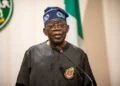
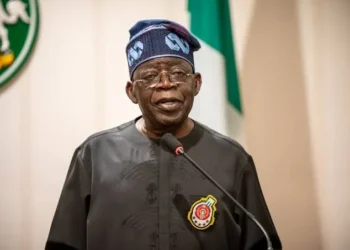
President Bola Ahmed Tinubu has called for urgent reforms in global governance, finance, and healthcare systems, stressing that Africa continues to bear the brunt of the climate crisis despite its minimal contribution to global emissions. “Africa has contributed the least to global emissions but suffers the most,” Tinubu declared at the 17th BRICS Summit in Rio de Janeiro, where he addressed leaders of emerging economies and Global South nations.

In a statement issued by his Special Adviser on Information and Strategy, Bayo Onanuga, Tinubu urged a comprehensive reevaluation of the international order. “Nigeria, therefore, associates with what I have heard today and all that has happened in BRICS. The next issues are financial restructuring and reevaluation of the global structure,” he said, stressing the need for fairness and inclusion for low-income countries, particularly in Africa.
The President identified climate change, environmental degradation, and healthcare disparities as key challenges stalling development in emerging economies. He called for “a new path of justice” based on equitable access to sustainable technology and financing mechanisms that would allow developing nations to fully benefit from global initiatives.
He also praised Africa’s proactive climate efforts through projects like the African Carbon Market Initiative and the Great Green Wall. “We believe that COP-30 will strengthen our resolve to adopt a strategic approach to achieving a healthy global environment,” Tinubu noted.
Reiterating Nigeria’s commitment to South-South cooperation, the President emphasized the importance of amplifying the voices of developing nations in global decision-making. “We can, therefore, not be passive participants in global decision-making on financial restructuring, debt forgiveness, climate change, environmental issues, and healthcare,” he said.
Addressing the future of Nigeria’s youth, who make up 70 percent of the population, Tinubu outlined the country’s reform agenda. “We are taking bold steps to accelerate renewable energy adoption, mainstream climate action, promote nature-based solutions, strengthen urban resilience, champion South-South cooperation, align with the global renewal framework, and achieve universal health coverage for all,” he said.
On healthcare, he highlighted the growing threat of non-communicable diseases and urged for collaborative solutions. “As we approach COP-30 and look to strengthen the global health system, we believe the BRICS must not only be a bloc for emerging economies but also a beacon for emerging solutions and resolutions rooted in solidarity, self-reliance, sustainability, and shared prosperity of a common future,” Tinubu added.
Nigeria attended the summit for the first time as a BRICS partner country, having attained the status in January 2025 alongside Belarus, Bolivia, Cuba, Kazakhstan, Malaysia, Thailand, Uganda, and Uzbekistan. The partner-country category was introduced during the 16th BRICS Summit in Kazan, Russia.
President Tinubu was accompanied to the summit by Minister of Foreign Affairs Yusuf Tuggar and Minister of Finance Wale Edun.