Iran has said the reopening of the Strait of Hormuz depends on the United States ending what it described as hostile actions against the Islamic Republic, despite repeated claims by US President Donald Trump that Tehran is seeking a deal.

Tehran has denied that negotiations are underway with Washington, insisting instead that it is working with neighbouring Oman on arrangements for the strategic waterway.
According to Iran’s state news agency IRNA, Foreign Ministry spokesman Esmaeil Baqaei said the continued closure of the Strait was linked to the US naval blockade and other actions against Iran.
“The factors making the Strait of Hormuz insecure still exist on the part of the United States, particularly the naval blockade and other aggressive and threatening actions against Iran and its interests,” Baqaei said.
Iran announced on Wednesday that it had reached an agreement with Oman on a shipping route through the Strait of Hormuz and was finalising plans for the joint management of the vital maritime corridor.
The proposed arrangement is seen as a step towards reopening one of the world’s busiest energy transit routes. However, Iranian officials stressed that any meaningful progress would depend on Washington lifting what they described as its naval blockade of Iranian ports.
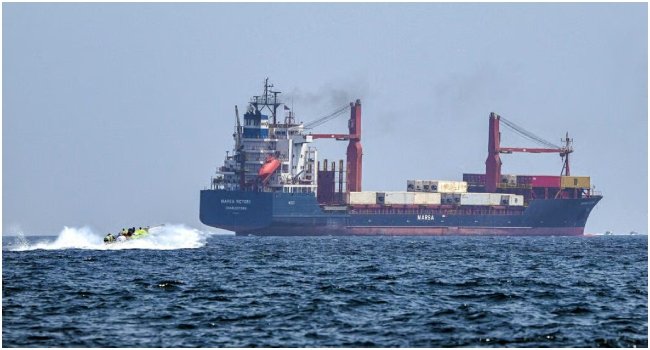
Since the outbreak of the war with the United States and Israel on February 28, Iran has exercised de facto control over the Strait and warned that vessels using routes it considers unauthorised could face action.
“The geographical coordinates of the route envisaged by the two sides have been agreed upon and, if certain third parties do not obstruct the process, the joint statement of the two countries, containing the main considerations and points of agreement, is also in the final review and drafting stage,” Baqaei said, according to IRNA.
He added that although discussions with Oman were progressing, an agreement would not necessarily guarantee the safety of all vessels navigating the waterway.
Security concerns persisted on Wednesday after the captain of an oil tanker reported hearing two explosions while transiting the Strait, about nine nautical miles (17 kilometres) southeast of Kumzar, Oman, according to the United Kingdom Maritime Trade Operations (UKMTO). The agency said both the vessel and its crew were unharmed.
Separately, Yemen’s Iran-backed Houthi rebels claimed responsibility for attacks on two Saudi oil tankers, saying the vessels Wafa and Daisy were struck with missiles off Yanbu in the northern Red Sea and in the Gulf of Aden respectively. Saudi authorities had not commented on the claims at the time of reporting.
Before the conflict, the Strait of Hormuz handled about one-fifth of global oil and liquefied natural gas exports. Continued disruptions have fuelled repeated spikes in global energy prices, increasing economic and political pressure on the United States.
US Vice President JD Vance acknowledged that diplomacy with Iran remained difficult, citing divisions within the country’s leadership.
“It’s going to be messy and it’s going to take some time to get there,” Vance told Fox News.
“The reality… is that number one, the Iranians are extraordinarily difficult people. Number two, they have a fractured system,” he said.
Since imposing an effective blockade around the Strait, Iran has directed vessels to use routes close to its coastline. Many ships, however, have continued to sail along the southern side of the waterway near Oman, where some have reportedly come under attack.
Iran has also indicated its intention to exercise greater control over the Strait and impose transit tolls, a move likely to face strong opposition from Washington.
Although President Trump last week warned that the United States could strike Iran “very hard,” including possible attacks on civilian infrastructure, he later suggested that a diplomatic breakthrough was possible.
Iran’s Foreign Ministry, however, maintained that no negotiations with Washington are currently taking place.
AFP