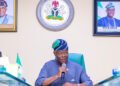
Dr. Zacch Adedeji, Executive Chairman of the Federal Inland Revenue Service (FIRS), has described President Bola Tinubu’s tax reform initiatives as central to Nigeria’s strategy for economic resilience.

Speaking at the inaugural lecture series of the University of Ilesa, Osun State, hosted by Vice Chancellor Professor Taiwo Olufemi Asaolu, Adedeji addressed academics, policymakers, students, and industry leaders, describing Nigeria’s revenue challenges not as a crisis, but as an opportunity for urgent reform.
In his lecture titled “Economic Resilience in an Era of Dwindling Revenue”, Adedeji highlighted the global pressures affecting public finances, including digital disruption, rising debt, climate challenges, and overlapping economic shocks. He argued that Nigeria’s path forward requires stronger institutions, diversified revenue streams, and a modernised tax framework.
Adedeji outlined four pillars for building a resilient economy: fiscal flexibility, policy coherence, institutional strength, and human capital adaptability. He emphasised that expanding non-oil revenue, deepening tax reforms, and strategically investing in skills development are crucial for keeping pace with global economic trends.
He also provided insights into President Tinubu’s renewed hope agenda within the ongoing FIRS reforms, highlighting initiatives such as automation of tax processes, expansion of TaxPro Max, improved taxpayer identification, and strengthened partnerships with state governments to reduce fragmentation. According to Adedeji, these measures are designed to enhance efficiency, transparency, and compliance.
Urging Nigerian universities to actively contribute to the country’s economic strategy, he advocated for collaboration with government institutions to develop evidence-based models for digital taxation, revenue mobilisation, and economic diversification.
He described higher education institutions as “potential engines of innovation capable of supporting policy development and national competitiveness.”