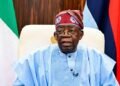
Former Minister of Foreign Affairs, Professor Bolaji Akinyemi, has urged President Bola Tinubu to appoint a foreign policy adviser within the Villa to guarantee proper implementation of international agreements signed by the president.

Speaking in an interview on Thursday, Akinyemi said: “The president is really the chief marketer for Nigeria.
He markets the country. And when we have ambassadors on seat all over the world, the president does that job effectively. But it is implementation when those agreements are brought back home. And I think the message should be addressed to the civil servants.”
The former minister, however, noted that the Presidency currently lacks a clear structure for follow-through on foreign commitments. “There is a lacuna in the villa at the moment.
I don’t know who is handling foreign affairs. Once the president comes back, his attention goes to domestic issues.
And God knows there are enough domestic issues for him to concentrate on. He needs an adviser on foreign policy in the villa, who also will now keep an eye on the Ministry of Foreign Affairs to ensure that these agreements are implemented.”
Akinyemi also criticised the government for leaving Nigeria without ambassadors for more than two years, describing the situation as “very unusual.”
“Well, it is a very unusual position for two years not to have ambassadors in post. I think the president owes us really an explanation.
There must be something there. And that makes it in a way difficult for me to explain.
It’s not my job to explain, it’s the job of the foreign minister or Bayo Onanuga to explain why we don’t have ambassadors in post. It cannot be due to lack of money.”
According to him, the absence of ambassadors undermines Nigeria’s diplomatic presence and weakens its global aspirations, particularly at the United Nations.
“Governments or countries interpret your feeling towards them… by whether you have a fully functioning embassy. When you leave the top posts empty.
They notice your ambassador is not there. And when you don’t have an ambassador at post… a chargé d’affaires cannot perform that position. No, it doesn’t work that way.”
Rejecting suggestions that financial constraints may have caused the delay, Akinyemi insisted: “How could it be a money issue when you are increasing the revenue that’s coming from the federal allocation to states? You are increasing the money that is going to the National Assembly.
We are not a poor country. The federal government is not a poor agency. It’s not about to go broke.
The excess revenue that has been generated in the past one year why should the foreign ministry not have gotten the share that it needs to keep embassies running? There must be something there. I don’t know what it is.”
The former minister further argued that African countries often enter negotiations at a disadvantage due to lack of technical preparation.
“We must accept that diplomacy has become the art of specialists.
Before they come for a conference, the Chinese have already spent six months looking at what they intend to achieve, and their documents are ready.
In Africa, do we use experts, or do we simply regard it as a bureaucratic thing? The bureaucratisation of issues is going to be the death of Africa.”
He also dismissed claims that Nigeria’s ties with Brazil deteriorated during his tenure under General Ibrahim Babangida, insisting relations were strong and cooperative.
“The loss of position between Brazil and Nigeria I don’t remember the issue coming up, honestly.
If it had come up, I bet you IBB would. IBB was an activist, not only as a president, but also in foreign affairs.
When I was putting together the concert of medium powers, Brazil was one of the countries that I nominated, and they attended all the conferences. So our relationship with Brazil was very good.
And in my conception, Brazil was one of the countries that we should be growing with at par.”