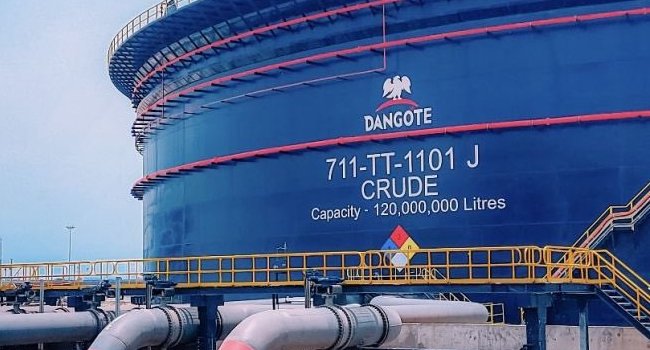
The Dangote Refinery has helped cushion Nigeria from the worst effects of the global energy crisis sparked by the ongoing Iran war, the World Bank has said.

The international financial institution noted that while the conflict has significantly disrupted global energy supply chains, Nigeria has been relatively insulated due to increased domestic refining capacity.
According to the World Bank, the refinery’s operations have played a stabilising role in ensuring the availability of petroleum products within the country, even as global markets face shortages and price volatility.
The Iran conflict has led to a major disruption in global oil and gas supplies, particularly following restrictions around the Strait of Hormuz—through which a significant portion of the world’s energy passes—triggering sharp increases in fuel prices and inflation worldwide.
Despite these pressures, Nigeria has avoided severe supply shortages seen in other countries, largely due to the output from the Dangote facility, which has ramped up production and supported both local consumption and regional exports.
The World Bank highlighted that the refinery’s contribution underscores the importance of local refining in enhancing energy security, reducing dependence on imports, and strengthening resilience against external shocks.
However, it also noted that while supply stability has improved, global price movements continue to influence domestic fuel costs, meaning Nigerians are not entirely shielded from the broader economic impact of the crisis.
The development comes amid wider concerns about the global economic fallout of the Iran war, which has pushed up energy prices and heightened inflation risks, particularly in emerging markets.
The World Bank reiterated the need for continued reforms and investments in the energy sector to sustain gains and further protect the economy from future global disruptions.