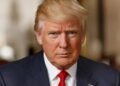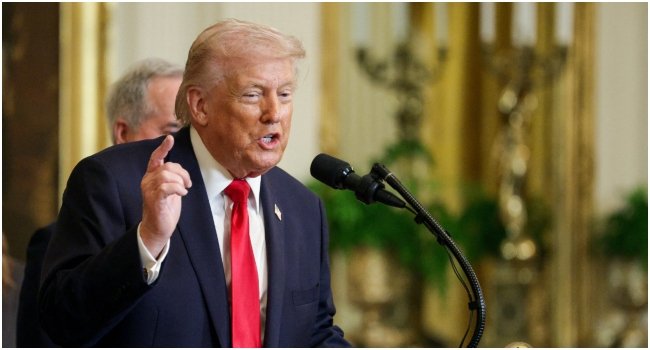
Millions of Americans are expected to take to the streets on Saturday in nationwide protests against President Donald Trump, as opposition intensifies over what demonstrators describe as authoritarian leadership and controversial policy decisions.

The demonstrations, organised under the grassroots “No Kings” movement, mark the third large-scale protest in less than a year since Trump began his second term in January 2025. The movement has emerged as one of the most visible platforms for public dissent against the administration.
Organisers say the latest protests are fuelled by growing concerns over the administration’s domestic policies and its recent military involvement in Iran alongside Israel, which critics argue has heightened global tensions.
The first nationwide protest took place in June, coinciding with Trump’s 79th birthday and a military parade in Washington, drawing millions of participants across major cities. A second protest in October reportedly attracted about seven million demonstrators.
Saturday’s rallies are expected to surpass previous turnouts, with more than 3,000 events planned across urban centres, suburbs, and rural communities nationwide. Protest activities are set to take place from New York to San Francisco, including smaller locations such as Kotzebue in Alaska.
Critics of the president have raised concerns over his governance style, citing frequent use of executive orders, alleged politicisation of the Justice Department, environmental policies, and crackdowns on diversity programmes, as well as an expanded military posture despite earlier campaign promises.
Speaking ahead of the protests, Naveed Shah of Common Defense, a veterans’ group aligned with the movement, said: “Since the last time we marched, this administration has dragged us deeper into war.
“At home, we’ve watched citizens killed in the streets by militarized forces. We’ve seen families torn apart and immigrant communities targeted. All of it done in the name of one man trying to rule like a king.”
Minnesota is expected to serve as a focal point for the demonstrations, months after it became central to national debates over immigration enforcement. Legendary musician Bruce Springsteen is scheduled to perform in St. Paul, where he will present his song “Streets of Minneapolis,” written in memory of victims of protest-related violence.
In a statement, organisers accused the administration of undermining democratic values, saying: “Masked secret police terrorizing our communities. An illegal, catastrophic war putting us in danger and driving up our costs. Attacks on our freedom of speech, our civil rights, our freedom to vote. Costs pushing families to the brink. Trump wants to rule over us as a tyrant.”
They added that what began in 2025 as a day of protest has evolved into a broader national resistance movement.
Randi Weingarten, president of the American Federation of Teachers, described the moment as critical, urging the administration to address public concerns.
“America is at an inflection point,” she said. “People are afraid, and they can’t afford basic necessities. It’s time the administration listened and helped them build a better life rather than stoking hate and fear.”
With Trump’s approval rating hovering around 40 per cent and midterm elections approaching in November, political observers say the scale of the protests could signal growing electoral pressure on the administration.