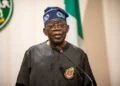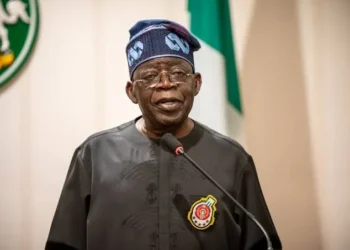


President Bola Tinubu has called for sweeping reforms in the global financial and resource management systems to give Africa greater control over its vast mineral wealth.

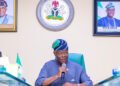
Speaking through Vice-President Kashim Shettima at the Second Africa Minerals Strategy Group (AMSG) High-Level Roundtable on Critical Minerals Development, held on the sidelines of the 80th United Nations General Assembly in New York, Tinubu urged African nations to take charge of financing and managing their mineral sectors rather than depend on external powers.
He said Africa must move beyond the practice of exporting raw materials and importing finished goods, calling for a new approach where beneficiation and green manufacturing are developed on African soil. The president stressed that collective action was vital to safeguard the continent’s sovereignty and future.
According to Tinubu, the pathway to unlocking Africa’s mineral-driven economy rests on four priorities: moving up the value chain, adopting African-owned classification systems such as the African Minerals and Energy Resource Classification (AMREC) and the Pan-African Resource Reporting Code (PARC), accelerating government-led mineral exploration, and strengthening geological mapping.
Highlighting ongoing reforms, Tinubu cited the decisions by Zimbabwe, Gabon, and Kenya to restrict or ban raw mineral exports as bold examples of Africa reclaiming control over its resources.
He reaffirmed Nigeria’s commitment under the Renewed Hope Agenda to drive similar reforms, create jobs, and boost domestic industries.
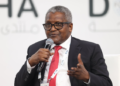
The president also praised Nigeria’s Minister of Solid Minerals Development, Dr. Dele Alake, who chaired the event, and the AMSG Secretary-General, Moses Michael Engadu of Uganda, for steering the continent towards greater productivity and unity.
International partners also weighed in. UNDP’s Regional Director for Africa, Ahunna Eziakonwa, warned that Africa must avoid exploitation and instead ensure partnerships that deliver value, technology transfer, and job creation.
European Union Commissioner for International Partnerships, Jozef Stkela, noted that the EU had adopted a Critical Raw Materials Act in 2024 and signed 14 strategic partnerships worldwide, including four in Africa, to diversify supply chains.
On the sidelines of the UN meetings, Vice-President Shettima also engaged global investors at a roundtable hosted by the Business Council for International Understanding in partnership with Flour Mills of Nigeria.
He assured stakeholders that Tinubu’s economic reforms were stabilising Nigeria’s economy and opening new opportunities for investment.
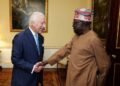
Shettima later held bilateral talks with Austrian Chancellor Christian Stocker, where both leaders agreed to deepen relations and explore fresh areas of cooperation.