The Minister of Works, David Umahi, has announced that the closed-circuit television (CCTV) surveillance system newly installed on the Third Mainland Bridge in Lagos is now fully operational and ready for commissioning.

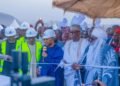
Speaking during a press briefing on Friday as part of his inspection tour of key infrastructure projects across the South-West, Umahi confirmed the development in response to a question about the bridge’s security upgrades.
“Yes, I think we can commission that,” he said, referring to the surveillance system.
The CCTV installation is part of a comprehensive federal initiative to modernise road infrastructure through the deployment of smart technology. Other components of the project include solar-powered street lights, road sensors, and emergency response systems all designed to improve traffic monitoring, enhance road safety, and deter criminal activity.
However, Umahi expressed dismay over recurring vandalism on and around the bridge, particularly at the Iyana Oworo axis, where safety reflectors popularly known as “cat eyes” have reportedly been removed by unidentified individuals. He also condemned the theft of rods from bridge parapets and concrete structures.
“The minister cannot be everywhere. The job of public infrastructure is the duty of everyone. So you have to condemn strongly the people harvesting rods on bridge parapets, people harvesting rods on concrete infrastructure, pulling the very beautiful cat eyes we did,” he said.
Umahi urged Nigerians to regard public infrastructure as a shared asset, stressing the need for collective vigilance and civic responsibility in protecting national investments. He emphasised that the success of technological systems, such as the CCTV network, depends heavily on public cooperation and accountability.
The Third Mainland Bridge surveillance system falls under the government’s broader Highway Development and Management Initiative (HDMI), which aims to integrate smart monitoring, rapid emergency response, and long-term maintenance frameworks into federal road projects.
As the longest of three bridges connecting Lagos Island to the mainland — and one of the longest in Africa — the Third Mainland Bridge has been the focus of ongoing federal interventions, ranging from structural rehabilitation to enhanced security measures.