

The Russian government has dismissed allegations that Nigerians are being recruited to fight in the ongoing war in Ukraine, insisting that no such programme exists and that any related activities would be unlawful.

Russia’s Ambassador to Nigeria, Andrey Podyelyshev, made the clarification during a press briefing in Abuja, where he stated that the Kremlin does not operate any official recruitment scheme targeting Nigerian citizens.
“There is no government-supported programme to recruit Nigerians to fight in Ukraine,” the envoy said.
He added that any individuals or groups attempting to enlist Nigerians for the conflict are acting outside the law and without the backing of the Russian state.
“If some illegal actors are attempting to recruit Nigerians to fight in Ukraine, this is not connected with the Russian state,” Podyelyshev said, noting that authorities are willing to investigate credible reports. “If anybody has information, we are ready to send it to Russian law enforcement authorities for investigation.”
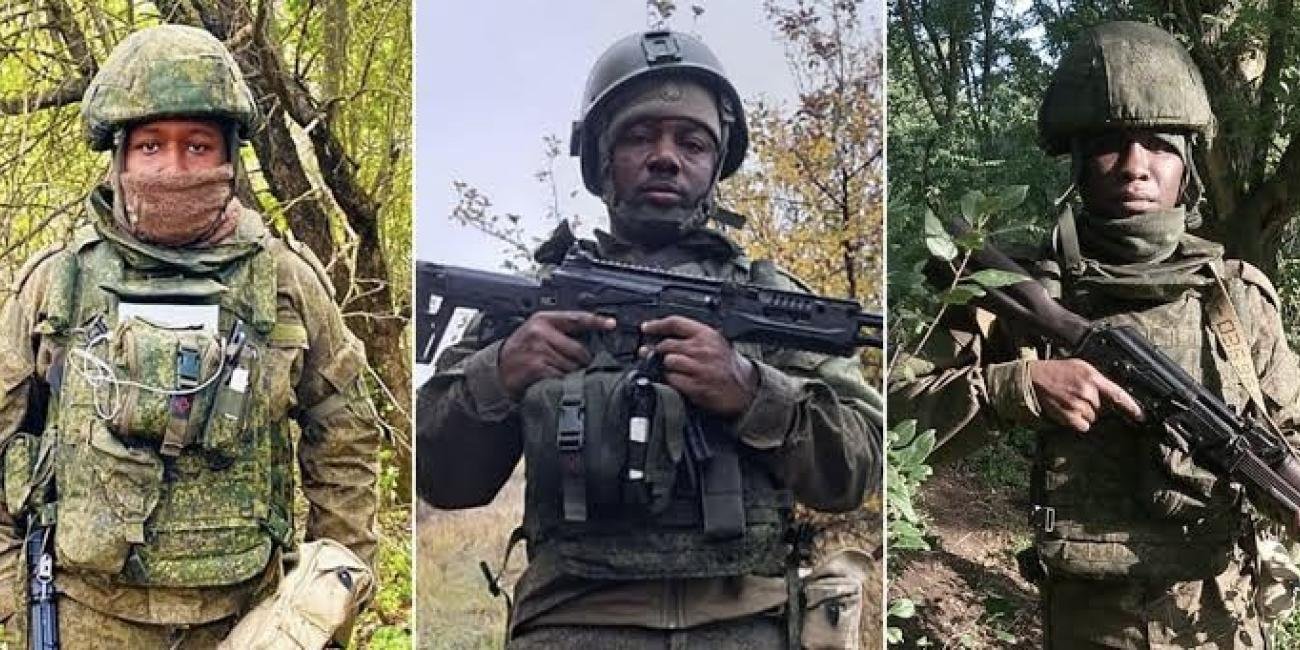
The ambassador’s remarks come amid reports that some Nigerians and other Africans were allegedly lured to Russia with promises of civilian employment or financial incentives, only to be deployed to the battlefield.
While acknowledging that some Nigerians may be present in the conflict zone, Podyelyshev maintained that their involvement is not the result of any official Russian policy.
“There are such Nigerians, I know, but there is no government-supported programme to recruit them,” he said.
Beyond the controversy, the envoy reaffirmed Moscow’s interest in strengthening bilateral ties with Nigeria, particularly in areas such as military-technical cooperation, training, and equipment supply. He described Nigeria as a key partner whose cooperation is central to Russia’s broader engagement in West Africa.
The briefing also highlighted expanding collaboration in sectors including education, energy, and technology, as both countries explore long-term strategic partnerships.
The Russia–Ukraine war, which escalated in February 2022, remains the largest armed conflict in Europe in decades, with growing international concern over the involvement of foreign nationals on both sides.