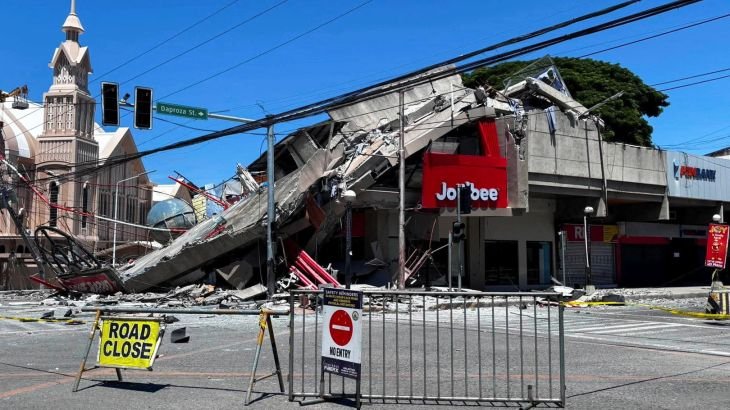
Tsunami fears swept across parts of Southeast Asia and the Pacific on Monday after a powerful 7.8-magnitude earthquake struck off the coast of Mindanao in the southern Philippines, sending residents rushing to higher ground and triggering emergency warnings across the region.

The quake occurred off the coast of Mindanao, triggering alerts from Philippine authorities, neighbouring Indonesia and the United States Tsunami Warning System. Residents in several coastal communities were urged to move to higher ground amid fears of possible tsunami waves.
While there were no immediate reports of fatalities or widespread destruction, local authorities said damage assessments were ongoing as a series of aftershocks continued to rattle affected areas.
DZBB radio in General Santos City, located approximately 15 kilometres from the earthquake’s epicentre, reported incidents of falling furniture and damaged household appliances as frightened residents evacuated their homes.
Officials from the city’s disaster management office said they were investigating reports of property damage and injuries while continuing to monitor aftershocks.
In nearby Sarangani province, power and telecommunications services were disrupted, while classes were suspended as a precautionary measure. Local disaster chief Rene Punzalan said inspection teams had been deployed, adding that no building collapses had been reported.
Philippine President Ferdinand Marcos Jr. assured residents that the federal government was responding swiftly to the emergency.
“The national government is moving and we will not leave Mindanao behind,” Marcos said in a statement.
The Philippine Institute of Volcanology and Seismology (Phivolcs) warned that tsunami waves exceeding one metre could reach some coastal areas and persist for several hours. Indonesia’s Meteorology, Climatology and Geophysics Agency (BMKG) later reported tsunami waves measuring 0.19 metres.
Benjie Ancheta, police chief of Alabel town in Sarangani province, said cracks were discovered in the local police station after the earthquake struck during a flag-raising ceremony.
The Philippines and Indonesia are situated along the seismically active Pacific Ring of Fire, a region prone to frequent earthquakes and volcanic eruptions due to ongoing tectonic plate movements.