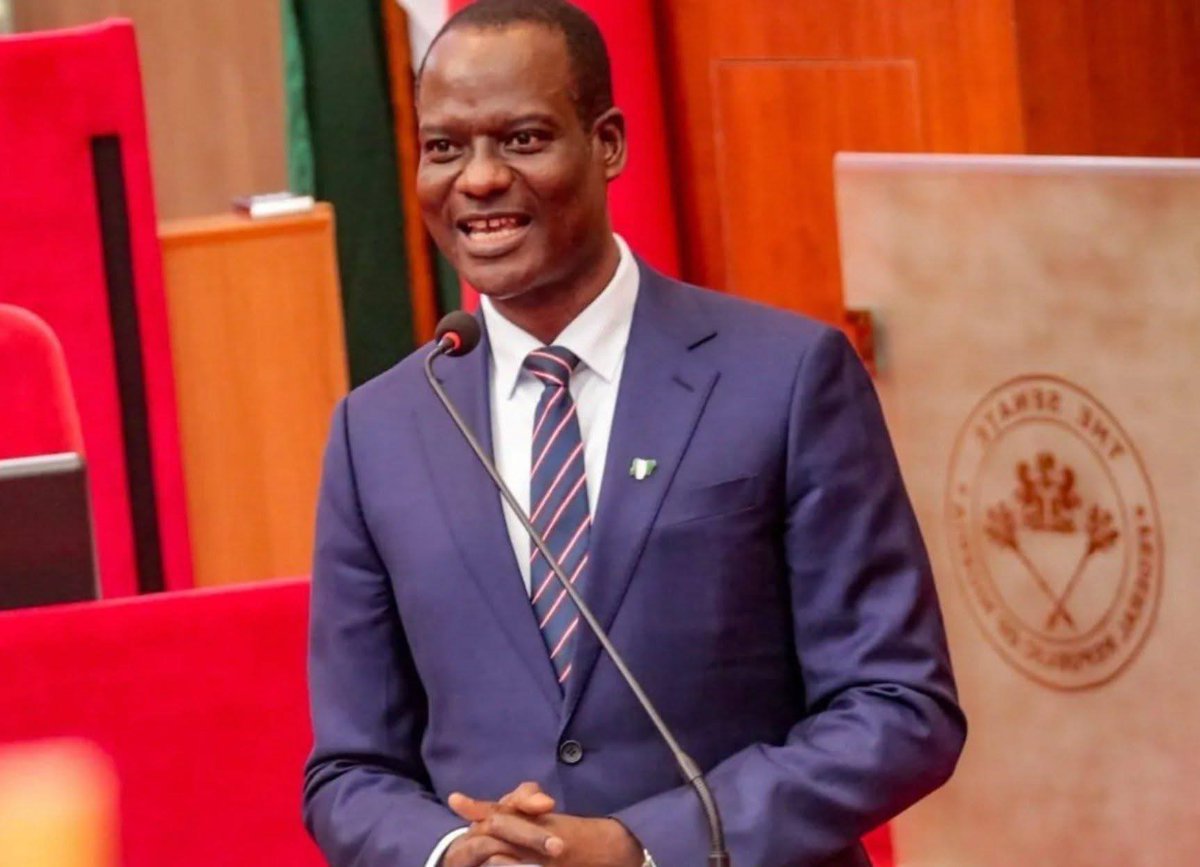
The Minister of Finance and Coordinating Minister of the Economy, Mr Taiwo Oyedele, has warned that misinformation poses one of the greatest threats to banking stability, stressing that a strong deposit insurance system is critical to maintaining public confidence and safeguarding Nigeria’s financial system.

Oyedele made the remarks on Tuesday at the opening of the 2026 International Association of Deposit Insurers (IADI) Africa Regional Committee (ARC) Annual Meeting and Workshop in Abuja.
The event, hosted by the Nigeria Deposit Insurance Corporation (NDIC), was themed, “Safeguarding Stability: Public Awareness and Crisis Readiness for a Stronger Future.”
The minister said that while technological innovation, financial technology (fintech) and cross-border financial integration have created significant opportunities for financial inclusion and economic growth, they have also exposed financial systems to new risks that require stronger crisis preparedness.
He stressed that sustainable economic growth depends on a stable financial system built on public confidence.
According to Oyedele, the rapid spread of rumours and misinformation across digital platforms has become a major risk to financial stability, capable of triggering liquidity pressures even in fundamentally sound financial institutions.
He noted that educating the public about deposit insurance should be regarded as a core risk management strategy rather than a public relations exercise, explaining that depositors who understand that their savings are protected are less likely to panic during periods of uncertainty.
Oyedele also called for stronger collaboration among ministries of finance, central banks, deposit insurers and regulatory agencies, stressing that crisis preparedness must become an institutional culture rather than a reaction to emergencies.
“Confidence cannot be legislated, purchased, or imposed. It must be earned – through strong institutions, transparency, effective communication, preparedness, and consistent action.
“The stronger our institutions, the greater the confidence they inspire; the greater the confidence, the more resilient our financial systems become; and the more resilient our financial systems, the stronger our economies and the greater the prosperity we can create for our people.
“I commend the International Association of Deposit Insurers, the Africa Regional Committee, and the Nigeria Deposit Insurance Corporation for convening this important dialogue.”
Highlighting recent economic reforms under President Bola Tinubu, the minister said 33 of Nigeria’s 37 banks had successfully met the new capital requirements under the banking sector recapitalisation programme, raising approximately ₦4.65 trillion in fresh capital.
According to him, stronger bank balance sheets have significantly reinforced the country’s financial safety net by reducing the likelihood of bank failures and limiting potential exposure to the deposit insurance system.
Oyedele also cited Nigeria’s removal from the Financial Action Task Force (FATF) grey list in October 2025 as another milestone that has strengthened confidence in the country’s financial system.
He described deposit insurance as a key driver of financial inclusion, noting that greater public confidence encourages savings, expands lending and supports investment, job creation and inclusive economic growth.
Also speaking, Governor of the Central Bank of Nigeria (CBN), Mr Olayemi Cardoso, said maintaining public confidence has become the foremost responsibility of financial authorities as technology continues to transform the banking sector.
Represented by the Director of the Other Financial Institutions Supervision Department (OFISD), Mr Solaja Mohammed-Jamiu Olayemi, Cardoso said effective deposit insurance extends beyond legal protections to ensuring that members of the public clearly understand how those safeguards operate.
He said public awareness should be regarded as a strategic component of financial stability, especially in an era where misinformation can spread rapidly across social media and digital platforms.
Cardoso warned that online narratives could quickly erode confidence in financial institutions, making timely, accurate and credible communication indispensable.
The CBN governor also stressed the importance of crisis preparedness, noting that recent episodes of financial stress around the world have shown that institutions investing in contingency planning, crisis simulation exercises and operational resilience are better equipped to minimise disruptions.
He added that effective crisis management requires close coordination among central banks, deposit insurers, supervisory authorities and other financial regulators.
According to Cardoso, innovation has transformed financial services by expanding financial inclusion while simultaneously exposing institutions to cyber threats and other emerging risks.
He said regulators must continue strengthening operational resilience and updating crisis management frameworks to keep pace with the evolving digital landscape.
Cardoso also highlighted the CBN’s banking sector recapitalisation programme as one of its most significant reforms, explaining that higher capital requirements are intended to create stronger financial institutions capable of absorbing shocks, supporting economic growth and competing globally.
Earlier, Managing Director and Chief Executive Officer of the NDIC, Mr Bello Hassan, described public confidence as the most valuable asset of any financial system.
He warned that trust built over many years could be eroded within days by uncertainty or misinformation.
According to Hassan, advances in fintech, artificial intelligence and cross-border financial activities have expanded opportunities for financial inclusion while creating complex risks that require coordinated responses from financial safety-net institutions.
He recalled the 2023 global banking turmoil as the most severe episode of systemic financial stress since the 2007–2008 global financial crisis, saying it demonstrated how quickly confidence can deteriorate in the digital age.
Hassan reaffirmed the NDIC’s commitment to strengthening depositor protection through improved reimbursement systems, sustained public awareness campaigns, enhanced crisis management capabilities and closer collaboration with the CBN, the Federal Ministry of Finance and other financial safety-net institutions.
He also called for deeper cooperation among African deposit insurers to strengthen information sharing, technical collaboration and coordinated responses to emerging financial risks.
“Across the globe, deposit insurance systems are having to adapt to a rapidly changing financial environment shaped by digital innovation, fintech developments, artificial intelligence and increasing cross-border financial activities.
“While these developments present significant opportunities to expand financial inclusion and improve service delivery, they also create new risks that require proactive, coordinated responses from financial safety-net participants.”
He added:
“Confidence remains the most valuable asset in any financial system. Indeed, trust takes years to build but can be eroded within days if stakeholders perceive uncertainty or instability.
“As deposit insurers, central banks, supervisors, and resolution authorities, our collective responsibility extends beyond establishing protective frameworks; it includes ensuring that the public understands, trusts, and relies on those frameworks during both normal and turbulent times.”
On the importance of public awareness, Hassan said:
“Public awareness is, therefore, an essential pillar of effective deposit insurance systems, and a critical tool for deposit insurers. A well-informed depositor is more likely to make rational decisions and less likely to react adversely to rumours, misinformation, during periods of uncertainty.
“Public awareness must therefore be treated not as a peripheral concern but as a pillar of stability. This underscores the importance of the discussions we will have during this Workshop on building confidence in normal times and strengthening communication strategies during crises.”