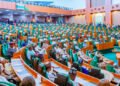


The leadership of the National Assembly has ordered the immediate release of the tax reform bills transmitted to and signed into law by President Bola Ahmed Tinubu, following public concerns over alleged discrepancies between the legislature’s votes and proceedings and the gazetted versions of the Acts.

In a press statement issued on Thursday, the National Assembly said the directive was taken in response to growing public debate and calls for transparency surrounding the recently passed Tax Acts.
According to the statement, the Clerk to the National Assembly has been instructed to make available copies of the transmitted Tax Bills, including the certificate pages bearing presidential assent, to enable Nigerians independently verify the authenticity of the documents.
The statement, signed by the Director of Information, Mr. Bullah Bi-Allah, on behalf of the Clerk to the National Assembly, clarified that while public interest in the Tax Acts had been high, only a limited number of individuals and organisations had formally applied for Certified True Copies (CTCs) of the harmonised bills.
It added that all such requests received so far had been fully processed, while other interested persons were advised to apply directly to the Office of the Clerk, clearly specifying the particular bills required and paying the prescribed fees.
The National Assembly further disclosed that the Clerk was currently working with the Federal Government Printing Press to ensure the publication of the duly certified and assented Acts in line with statutory requirements, noting that the official gazetted versions of the Tax Acts were expected to be ready on or before January 1, 2026.
While stressing that the Clerk initiated the gazetting process, the legislature emphasised that the responsibility for printing and final publication of Acts rested solely with the Federal Government Printing Press.
To prevent a recurrence of similar controversies, the National Assembly leadership announced a review of its internal procedures on the transmission and gazetting of bills. It disclosed that, going forward, all bills forwarded for presidential assent would be routed through designated Presidential Liaison Officers.
In addition, it said no request for the gazetting of any Act of the National Assembly would be entertained by the Federal Government Printing Press unless such a request was formally initiated by the Clerk to the National Assembly or an authorised representative.
The legislature commended Nigerians for their sustained interest and constructive engagement in legislative affairs, describing it as critical to strengthening transparency, accountability and professionalism in the law-making process.
Meanwhile, in a related development, Kogi State Governor, Usman Ododo, has signed the Kogi State Tax Bill into law, with effect from January 1, 2026, following the introduction of the new Nigeria Tax Reform Act by the Federal Government.
Governor Ododo signed two key revenue laws into force, aligning the state with the federal government’s tax reforms and effectively domesticating the Nigeria Tax Reform Act to ensure the smooth operation of the new tax regime.
The laws include the Kogi State Internal Revenue Service (Establishment) Law, 2025, and the Kogi State Taxes and Levies (Approved List for Collection) Law, 2025.
The new laws are expected to boost state revenue, enhance transparency and promote economic growth. They also provide exemptions for low-income earners, with individuals earning below ₦800,000 annually exempted from tax.
According to the provisions, the reforms are designed to encourage “increased investment: simplified tax processes and reduced compliance costs will attract businesses,” as well as ensure “technology-driven efficiency: digitalised tax administration will reduce human interference and promote accountability.”
The tax reforms, the statement noted, are aimed at supporting a structural reset, driving harmonisation and protecting dignity, rather than increasing tax obligations.