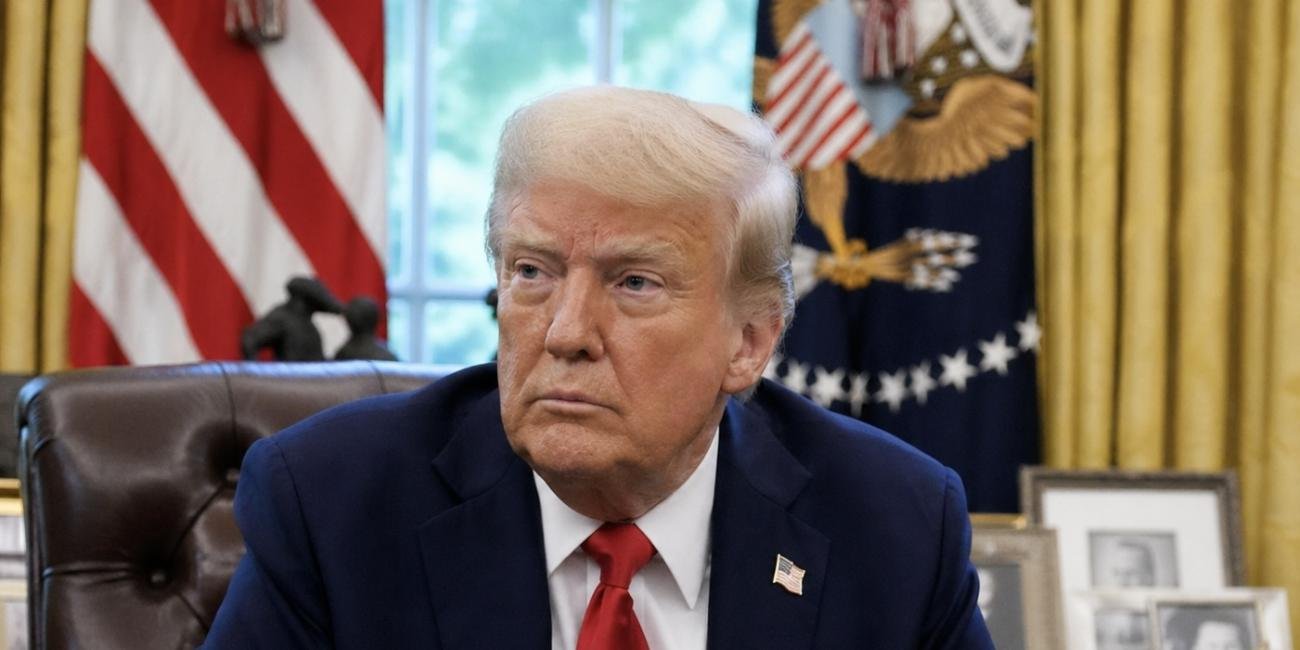
Iran has formally responded to the latest United States ceasefire proposal through Pakistani mediators, calling for negotiations centred on a permanent end to the ongoing conflict, but U.S. President Donald Trump swiftly dismissed the terms as “totally unacceptable!”

According to Iranian state television, Tehran is seeking a comprehensive end to hostilities across the region, including in Lebanon, where Israel continues military operations against the Iranian-backed Hezbollah. Iran also wants guarantees for the security of international shipping routes.
Washington’s latest proposal reportedly focused on ending the conflict, reopening the Strait of Hormuz and curbing Iran’s nuclear programme.
Trump, writing on social media earlier, accused Tehran of “playing games” with the United States for decades, declaring: “They will be laughing no longer!”
Despite the sharp rhetoric, U.S. Ambassador to the United Nations Mike Waltz said Washington was still pursuing diplomacy.
“Every chance we possibly can before going back to hostilities,” Waltz told ABC.
Iranian state media also reported that the country’s new supreme leader, Mojtaba Khamenei, had “issued new and decisive directives for the continuation of operations and the powerful confrontation with the enemies” during a meeting with military commanders, though no further details were provided.
The latest developments follow a U.S. proposal aimed at halting the fighting before broader negotiations on contentious issues such as Iran’s nuclear programme.
Iran’s semi-official Tasnim News Agency reported that Tehran’s proposal demanded an immediate end to the conflict on all fronts, the lifting of the U.S. naval blockade, guarantees against future attacks, and the removal of sanctions, including restrictions on Iranian oil exports.
Meanwhile, the The Wall Street Journal reported, citing unnamed sources, that Iran had proposed diluting part of its highly enriched uranium stockpile and transferring the remainder to a third country.
A Pakistani official confirmed that Islamabad, which has been mediating talks between both sides, had forwarded Tehran’s response to Washington.
Although a ceasefire has largely held for the past month, tensions remain high across the Gulf region. Hostile drones were reportedly detected over several Gulf states on Sunday, highlighting continuing security concerns.
The conflict has intensified pressure on the global economy ahead of Trump’s scheduled visit to China this week, with fears growing over the impact on international energy markets.
Iran has significantly restricted non-Iranian shipping through the Strait of Hormuz, a key global oil transit route that previously carried about one-fifth of the world’s oil supply and has become one of the war’s major flashpoints.
Addressing the status of military operations, Trump said in remarks aired on Sunday: “They are defeated, but that doesn’t mean they’re done.”
Israeli Prime Minister Benjamin Netanyahu also maintained that the conflict was far from over, saying there was “more work to be done” to eliminate Iran’s enriched uranium stockpile, dismantle enrichment facilities, and address Tehran’s proxy networks and ballistic missile capabilities.
Speaking during an interview with CBS News’ “60 Minutes,” Netanyahu said diplomacy remained the preferred option for removing Iran’s enriched uranium, though he stopped short of ruling out military action.