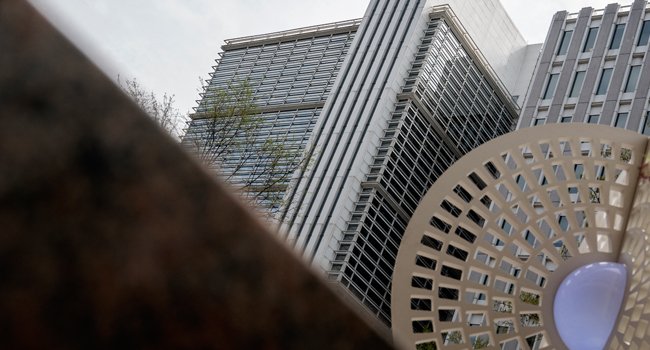
The International Monetary Fund (IMF) has projected that up to $50 billion in emergency financing may be required to support countries grappling with balance-of-payments shocks worldwide.

The projection comes as global economic pressures intensify, with food insecurity threatening about 45 million people and geopolitical tensions weighing heavily on growth prospects.
The Fund’s Managing Director, Kristalina Georgieva, warned that global growth forecasts are expected to be downgraded as policymakers convene for the 2026 Spring Meetings in Washington, D.C.
More than 1,000 delegates from 190 countries are expected to attend the meetings, which begin on April 13 under the theme “Anchoring Stability and Promoting Balanced Growth.”
Georgieva attributed the worsening outlook to “scarring effects from spiralling energy costs, supply disruptions, and damaged infrastructure,” highlighting the lingering impact of global crises on vulnerable economies.
Rising Global Tensions
The IMF’s warning comes amid escalating tensions in the Middle East, particularly following recent developments involving the strategic Strait of Hormuz.
U.S. President Donald Trump ordered a naval blockade of the key shipping route after talks with Iran collapsed, a move that has heightened concerns over global trade disruptions.
In response, Iran’s Revolutionary Guards warned they could trap any opposing forces in what they described as a “deadly vortex in the Strait if it makes the wrong move,” further raising fears of instability in global energy supply chains.
Trump, in a statement, defended the action, saying:
“Effective immediately, the United States Navy, the Finest in the World, will begin the process of BLOCKADING any and all Ships trying to enter, or leave, the Strait of Hormuz.”
He added that the U.S. would also target vessels that comply with what he described as illegal tolls imposed by Iran, declaring:
“THIS IS WORLD EXTORTION.”
The IMF said the anticipated emergency funding would help countries absorb external shocks, stabilise their economies, and prevent deeper financial crises.
The development underscores growing concerns about the fragility of the global economy, as policymakers prepare to navigate a complex mix of geopolitical risks, inflationary pressures, and slowing growth.