Delegations from the United States and Iran have arrived in Islamabad, Pakistan, for critical peace negotiations, as deep-seated mistrust, sanctions disputes and broader regional tensions threaten to derail fragile ceasefire efforts.

The talks, widely seen as a decisive test of ongoing diplomatic engagement, come on the heels of a two-week ceasefire brokered through Pakistan’s quiet mediation. Officials confirmed that both sides had landed in the Pakistani capital for negotiations being closely monitored by the international community.
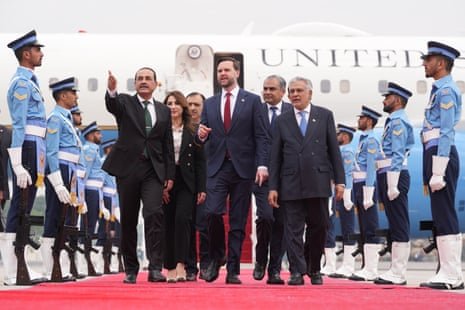
US Vice President JD Vance was received by Pakistan’s foreign minister shortly after arriving in Islamabad, just hours after the Iranian delegation touched down, underscoring the urgency surrounding the discussions.
Leading Iran’s delegation, Mohammad Bagher Ghalibaf struck a cautious tone, stressing that while Tehran was open to dialogue, it remained wary of Washington’s intentions.
“We have good intentions, but we do not trust” the United States, he said.
Earlier, Vance had warned that Washington would not engage constructively if Iran attempted to undermine the process, stating that the US would not be receptive if Tehran tried to “play us.”
The Islamabad talks are the result of behind-the-scenes diplomacy led by Pakistan, which acted as an intermediary between both sides. Sources familiar with the process described it as tightly managed within “a very small circle,” with communications carefully relayed to sustain the ceasefire framework.
According to insiders, the atmosphere surrounding the negotiations has been “sombre and serious but still hopeful that a cessation of hostilities will be the outcome.”
However, significant hurdles remain. Diplomats point to unresolved disagreements over sanctions, as well as uncertainty about whether Lebanon will be formally included within the scope of the ceasefire arrangement.
Complicating matters further, Lebanese officials have confirmed that their delegation is scheduled to meet with Israeli counterparts in Washington, adding another layer of geopolitical complexity to the already delicate negotiations.
Pakistan’s role as mediator reflects its strategic position, balancing longstanding ties with Iran—often described as a “brotherly” relationship—with its continued engagement with Washington.
US President Donald Trump had previously described Pakistan’s army chief, Asim Munir, as his “favourite” Field Marshal, noting that the military leader understands Iran “better than most.”
With stakes high and expectations tempered, the outcome of the Islamabad talks is expected to shape the trajectory of tensions in the region in the coming weeks.