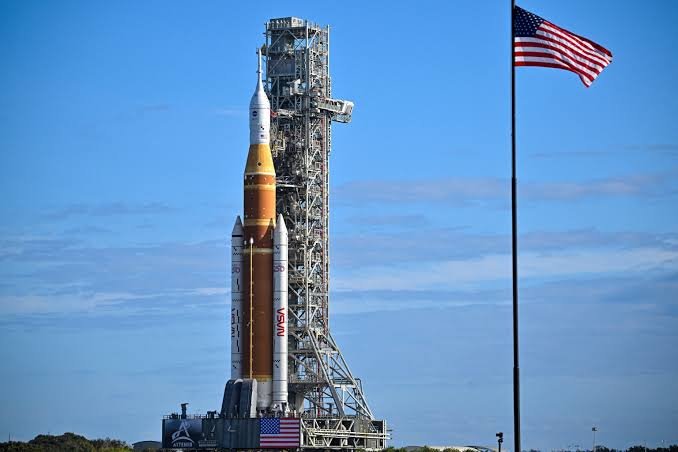
Astronauts aboard Artemis II have shared reflections on their record-breaking journey as they prepare for a high-speed “fireball” re-entry into Earth’s atmosphere, marking the final phase of the historic mission.

The four-member crew, travelling in the Orion capsule since launching from Florida last week, are scheduled to splash down off the Southern California coast on Friday evening after completing a lunar flyby earlier in the week.
Their trajectory took them past the moon’s far side, making them the farthest-travelling humans in history.
During re-entry, the astronauts are expected to reach speeds of up to 23,839 mph (38,365 kph), a critical phase that will test Orion’s heat shield against extreme atmospheric friction.
“I’ve actually been thinking about entry since April 3, 2023, when we got assigned to this mission,” said mission pilot Victor Glover. “There’s so many more pictures, so many more stories, and gosh, I haven’t even begun to process what we’ve been through. We still have two more days, and riding a fireball through the atmosphere is profound as well.”
The crew, which also includes Reid Wiseman, Christina Koch, and Canadian astronaut Jeremy Hansen, represents the first team in a series of missions aimed at returning humans to the lunar surface and establishing a long-term presence for future Mars exploration.
Koch described the Artemis programme as a relay effort, emphasising continuity between missions.
“In fact, we have batons that we bought to symbolize, physically, that. We plan to hand them to the next crew, and every single thing that we do is with them in mind,” she said.
Future missions under the Artemis programme will include docking tests and eventual lunar landings, with subsequent phases expected to build on the groundwork laid by Artemis II.
On Earth, scientists at NASA’s Mission Control in Houston have been closely monitoring the mission, analysing real-time data and engaging in interactive discussions with the crew during key phases of the journey.
The mission, expected to conclude after nearly 10 days, has already set a new distance record, reaching approximately 252,000 miles from Earth—surpassing the benchmark set during the Apollo 13 mission.
Commander Wiseman noted that crew members maintained contact with their families during the mission, including emotional moments such as a proposal to name a lunar crater after his late wife, Carroll.
During a six-hour lunar flyby, the astronauts conducted observations from about 4,000 miles above the moon’s surface, providing valuable real-time insights for scientists on the ground.
Koch described the moon as a “witness plate” to the formation of the solar system, stressing that the mission represents a crucial early step in advancing understanding of the universe.
As the crew prepares for re-entry, attention remains focused on the final and most demanding stage of the mission, which will bring their historic journey to a close.