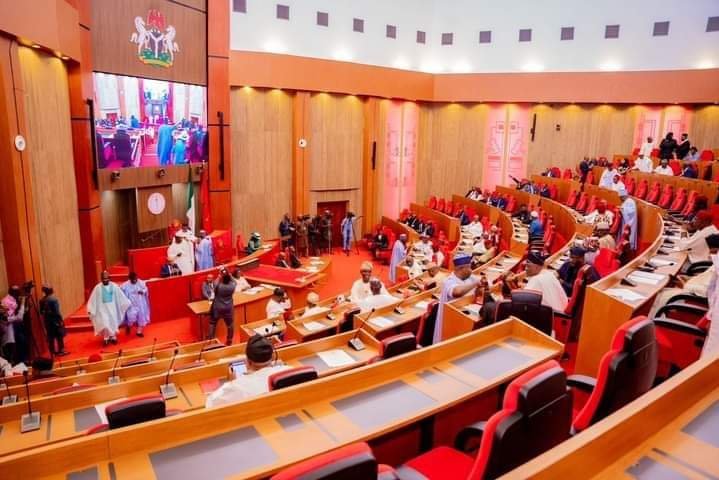
The Senate has intensified efforts to reform Nigeria’s agricultural colleges and research institutions, reaching out to international partners to facilitate reforms, technology transfer and new investments in the sector.

The initiative, led by the Senate Committee on Agricultural Colleges and Institutions, involves strategic engagements with countries including Malaysia, the European Union, Brazil, China, Germany, India and the United Kingdom as part of a broader strategy to revitalise agricultural education and research in Nigeria.
Chairman of the committee, Sharafadeen Alli, disclosed this during a series of high-level visits to diplomatic missions in Abuja. He stressed the National Assembly’s determination to leverage international expertise to boost productivity, strengthen capacity and generate employment in the agricultural sector.
According to him, the diplomatic engagements are part of preparations for the maiden National Legislative Summit and Expo on Agricultural Colleges and Research Institutions scheduled for May 11 to 13 at the International Institute of Tropical Agriculture in Ibadan.
A statement issued in Abuja by the committee said the summit is designed to mobilise global support, reinforce institutional frameworks and showcase innovations capable of accelerating Nigeria’s agricultural transformation.
Alli explained that the committee was deliberately building strategic alliances with leading agricultural nations to promote research collaboration, mechanisation and the adoption of modern farming practices.
During a visit to the Malaysian High Commission, the senator highlighted Malaysia’s global leadership in palm oil production and noted that Nigeria could benefit significantly from its experience in agro-industrial development and value chain optimisation.
At the European Union Delegation, Alli commended ongoing EU-supported interventions in Nigeria’s agricultural sector, particularly in oil palm research, while calling for deeper collaboration to tackle climate change, soil degradation and food security concerns.
Speaking at the Brazilian Embassy, the lawmaker praised Brazil’s highly productive agricultural system and said Nigeria could replicate similar successes through partnerships in mechanisation, irrigation and yield improvement.
He added that discussions with representatives of China and Germany focused on cooperation in agricultural engineering, precision farming and research-driven innovation.
At the Indian High Commission, talks centred on agro-technology, research exchange and capacity building, particularly in smallholder farming, where India has recorded significant progress.
Engagements at the British High Commission and with Paraguayan representatives also explored opportunities to strengthen bilateral cooperation in agricultural education, research funding and institutional reforms.
Alli emphasised that agriculture remains central to Nigeria’s economic diversification agenda, with enormous potential for job creation, poverty reduction and rural development.
He reaffirmed the National Assembly’s commitment to enacting legislation that would deepen partnerships, promote innovation and drive sustainable reforms across the sector.
The senator also urged diplomatic missions to participate actively in the forthcoming summit, expressing confidence that its outcomes would help shape policy direction and provide a roadmap for revitalising agricultural institutions across the country.