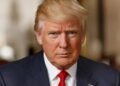
U.S. President Donald Trump has threatened to file a $1 billion lawsuit against the British Broadcasting Corporation (BBC) over what he described as a “deceptively edited” version of his 2021 Capitol speech.

In a letter sent on Sunday and obtained by Reuters, Trump’s legal team accused the BBC of defamation, demanding an immediate retraction of the documentary, a public apology, and financial compensation for what they termed “overwhelming reputational and financial harm.” The letter set a Friday deadline for the broadcaster to comply before legal action commences.
The dispute revolves around a Panorama documentary aired by the BBC, which Trump’s lawyers allege “intentionally and deceitfully” edited three segments of his January 6, 2021 speech to make it appear that he was inciting the Capitol riot. The letter also noted that the BBC omitted key portions where Trump urged his supporters to march “peacefully and patriotically.”
The controversy has intensified the crisis within the BBC, coming just after the resignation of Director-General Tim Davie and Head of News Deborah Turness. BBC Chair Samir Shah has apologised for what he called “an error of judgment,” while firmly denying claims of institutional bias within the corporation.
“The BBC is reviewing the legal threat and will respond directly in due course,” Shah said on Monday, confirming that the documentary has been pulled from the BBC’s iPlayer service.
Trump’s legal representatives argue that the edit was a deliberate attempt to interfere in the upcoming 2024 presidential election. “The BBC defamed President Trump by intentionally and deceitfully editing its documentary in order to try and influence the Presidential Election,” a spokesman stated.
Legal analysts point out that while defamation suits by public figures in the U.S. face high hurdles—requiring proof that the defendant knowingly published false information—Trump’s team intends to pursue the case under Florida law, citing his primary residence in the state.
In the U.K., defamation claimants must demonstrate that a publication caused or is likely to cause “serious harm” to their reputation.
During a briefing with British lawmakers on Monday, Shah maintained that the BBC remains committed to impartial journalism despite the controversy. “Mistakes were made, but BBC News’ DNA is impartiality — to provide the most accurate and trustworthy news possible,” he said.
Prime Minister Keir Starmer’s spokesperson defended the broadcaster, stressing that while the government did not view the BBC as biased or corrupt, it expected it to uphold its editorial standards.
President Trump, who continues to claim that his 2020 election loss to Joe Biden was the result of fraud—a claim repeatedly rejected by courts and investigations—insists that the BBC’s portrayal of his speech was politically motivated.
The BBC, operating under a Royal Charter and funded by the public, now faces growing pressure to restore its credibility and rebuild trust amid mounting global scrutiny over its editorial integrity.