

In a renewed effort to fight corruption and restore respect for Nigeria’s currency, the Economic and Financial Crimes Commission (EFCC) has unveiled a national sensitisation campaign aimed at challenging societal norms that glorify financial misconduct and the abuse of the naira.

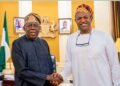
Speaking during a public enlightenment forum held in Lagos over the weekend, EFCC Chairman Ola Olukoyede emphasized that the agency is shifting its focus beyond arrests and prosecutions to tackling the deep-rooted cultural attitudes that foster corruption and impunity.
Olukoyede denounced the widespread practice of spraying and mutilating the naira during celebrations, describing it as a serious threat to national identity and economic stability. He stressed that such actions are not cultural expressions but violations that erode national values.
“The naira is a symbol of our sovereignty,” he stated, warning that continued abuse undermines the country’s financial system and international reputation.
The EFCC chairman recounted a troubling incident involving a former Nigerian governor who was arrested in the United Kingdom after being seen spraying pound sterling at his birthday celebration.
According to Olukoyede, hotel staff mistook the man’s behavior for a psychiatric episode and alerted emergency services. The ex-governor was subsequently handed over to the EFCC upon his return to Nigeria, prosecuted, jailed, and later granted a pardon.
Such episodes, Olukoyede said, highlight the need to change the perception that flashy displays of wealth—regardless of its source—are admirable. “When we celebrate fraud, we undermine the rule of law and destroy the moral fabric of society,” he added.
As part of its broader enlightenment strategy, the EFCC has launched an anti-corruption radio station, 97.3 FM, to promote civic responsibility and integrity.
The Commission is also partnering with filmmakers, community leaders, and the National Orientation Agency (NOA) to counter the glamorization of illicit wealth and embed values of honesty and accountability in public consciousness.
Lanre Isa Onilu, Director-General of the NOA, echoed these concerns, describing naira abuse as both unlawful and unpatriotic.
He called on citizens to treat the nation’s currency with respect, noting that it reflects the country’s dignity and image.
In its preventive drive, the EFCC has also established a fraud risk assessment unit, which, according to Olukoyede, prevented the theft of over ₦10 billion in public funds within the past year.
“Our success should not only be measured by convictions but by how much we’ve stopped from being stolen in the first place,” he said.
Olukoyede further warned that the cumulative effect of corruption extends beyond financial loss. He noted that the prevalence of cybercrime and fraud has damaged Nigeria’s international standing, contributing to the devaluation of the Nigerian passport. “There was a time Nigerians enjoyed visa-free access to several developed nations.
Today, even passports from smaller African countries like Ghana and Cameroon command more respect,” he lamented.
The EFCC’s latest initiative signals a broader approach to the anti-corruption war, focusing on both enforcement and long-term societal change.