

Nigeria and Brazil have officially signed the commercial phase of the $1.1 billion Green Imperative Project (GIP), a major agricultural initiative aimed at enhancing food security and attracting private-sector investment.

In a statement on Monday, Stanley Nkwocha, Senior Special Assistant to the President on Media & Communications (Office of the Vice President), described GIP as the largest agricultural project in Africa, emphasizing its focus on sustainable, low-carbon farming. “GIP aims to develop structural conditions that will boost food production in Nigeria efficiently and competitively,” he noted.
The memorandum of understanding (MoU) for the initial $1.1 billion phase of GIP was signed in 2018. Since then, additional agreements—including a $4.3 billion expansion and a $2.5 billion partnership with Brazilian agribusiness firm JBS—were finalized during President Bola Tinubu’s official visit to Brazil last year, bringing the total investment to approximately $8 billion.
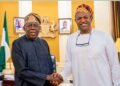
Vice President Kashim Shettima hailed the signing as a critical step in the administration’s efforts to enhance food security. Speaking at the signing ceremony at the Presidential Villa in Abuja, he emphasized the project’s role in driving economic growth and strengthening investor confidence.
“As this administration tackles food security challenges in line with President Bola Ahmed Tinubu’s 8-point agenda, it is imperative that we synergize and leverage existing initiatives such as the GIP to ensure policy continuity and maximize strategic opportunities,” Shettima said.
He further highlighted the project’s alignment with the government’s agricultural policies, underscoring its potential to integrate small-scale farmers into key agricultural value chains.
“For decades, Nigeria has struggled with low agricultural productivity. Entrepreneurial capitalism is embedded in the psyche of the average Nigerian, but many lack the resources to climb the first rung of economic development. The GIP is a game-changer because it links small-scale farmers to the entire agricultural ecosystem,” Shettima added.
The Vice President credited the Ministers of Agriculture, Finance, Justice, and Foreign Affairs, among others, for their role in making the project a reality.
Brazil Commits to Agricultural Development in Nigeria
Brazil’s Ambassador to Nigeria, Carlos Garcete, described the agreement as a milestone in the long-standing partnership between the two nations.
“Over the past seven years, we have worked closely with the Nigerian government to secure funding from private and regional development banks for this ambitious $1.1 billion project,” Garcete said.
He explained that the initiative would facilitate the importation of agricultural equipment, including tractors and spare parts, with assembly and maintenance carried out in Nigeria by trained local personnel.
“In the event of equipment breakdown, repairs will be done locally by experts trained under the GIP, ensuring sustainability and reducing dependence on foreign technical support,” he added.
The Brazilian envoy also expressed gratitude to President Tinubu for his role in finalizing the long-awaited agreement.
Several state governors expressed optimism about the project’s impact. Jigawa State Governor Alhaji Umar Namadi described the signing as a significant moment for subnational governments, emphasizing agriculture’s critical role in Nigeria’s economy.
“For us, this is a major development. Agriculture is central to our economic growth, and this project demonstrates the Tinubu administration’s commitment to transforming the sector,” Namadi said.
Benue State Governor, Rev. Fr. Hyacinth Alia, also welcomed the initiative, reaffirming his state’s readiness to support its implementation.
“As the food basket of the nation, Benue State is not just holding the basket; we are filling it with surplus food for the country. We will give our full support to ensure the success of this project,” Alia assured.
Minister of Foreign Affairs, Amb. Yusuf Tuggar, who was also present at the event, highlighted the project as a testament to the strength of South-South cooperation between Nigeria and Brazil. He noted that a recent bilateral meeting between both nations underscored their shared commitment to agricultural development.
“The success of Brazil in transforming barren savannahs into thriving agricultural hubs serves as an inspiration for Nigeria,” Tuggar stated.
With the signing of the commercial phase, the GIP is set to accelerate Nigeria’s agricultural transformation, fostering economic growth and reducing reliance on food imports.