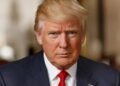
U.S. President Donald Trump has signed executive orders imposing a 25% tariff on steel and aluminium imports, set to take effect on March 12, despite strong opposition from global trade partners, including the European Union and China.

In an executive order issued Monday, Trump declared, “As of March 12, 2025, all imports of aluminium articles and derivative aluminium articles from Argentina, Australia, Canada, Mexico, EU countries, and the UK shall be subject to the additional ad valorem tariff.” A separate order extended the steel tariffs to these same nations, along with Brazil, Japan, and South Korea.
“I’m simplifying our tariffs on steel and aluminium,” Trump stated from the Oval Office. “It’s 25% without exceptions or exemptions.”
Global Concerns and Retaliation Threats
The European Union swiftly condemned the decision, with EU chief Ursula von der Leyen vowing to impose “firm and proportionate countermeasures.” German Chancellor Olaf Scholz urged a unified European response, expressing hope that “we are spared the misguided path of tariffs and counter-tariffs.”
France’s President Emmanuel Macron also criticized the move, stating in an interview that he would directly challenge Trump on his broader tariff threats against the EU. Meanwhile, Britain’s steel industry warned that the tariffs would be a “devastating blow.”
Indirect Targeting of China and Further Trade Tensions
While the tariffs primarily affect traditional U.S. trade partners, the orders also pointed to concerns over China’s indirect influence on U.S. markets. The executive order noted that certain countries—particularly Mexico—were allegedly being used to “funnel Chinese aluminium to the United States.”
China, the world’s second-largest economy, responded by imposing retaliatory tariffs on U.S. coal and liquefied natural gas. Chinese foreign ministry spokesman Guo Jiakun cautioned, “There is no winner in a trade war and tariff war.”
Trump’s Broader Tariff Strategy
Trump signaled the possibility of further tariffs on automobiles, pharmaceuticals, and computer chips, with an announcement expected later this week regarding “reciprocal tariffs” to match levies imposed on U.S. goods.
Having previously used tariffs as a strategic tool, Trump had briefly paused levies on Canada and Mexico in exchange for commitments to curb the flow of fentanyl and undocumented migrants. However, he has since moved forward with tariffs on China, imposing an additional 10% duty on Chinese imports.
Despite concerns from economic experts that tariffs could drive up costs for American consumers, Trump insisted that foreign exporters would bear the burden. He did, however, acknowledge that Americans “might feel some economic pain”.
Market Reactions
Wall Street’s major indices closed higher on Monday despite the tariff announcement, while Asian and European markets showed mixed reactions by Tuesday.