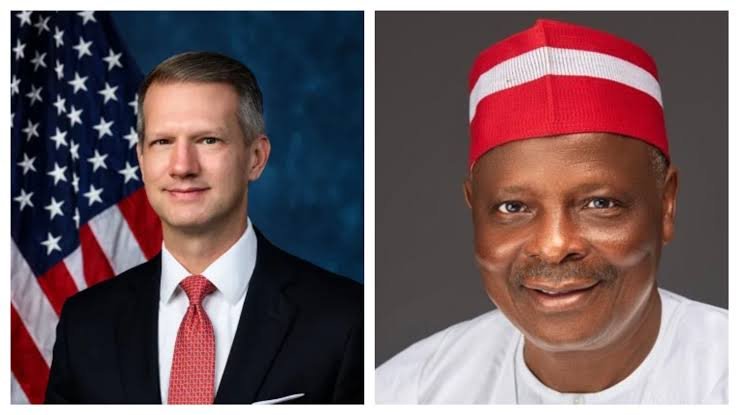
Five United States lawmakers have introduced a bill in Congress seeking sanctions against former Kano State Governor Rabiu Kwankwaso, the Miyetti Allah Cattle Breeders Association of Nigeria (MACBAN), and Miyetti Allah Kautal Hore over alleged violations of religious freedom.

The proposed legislation, titled the Nigeria Religious Freedom and Accountability Act of 2026, was sponsored by Representatives Chris Smith, Riley Moore, Brian Mast, Mario Diaz-Balart, and Bill Huizenga.
According to details published on the US Congress website, the bill alleges that Kwankwaso is among individuals contributing to what it described as a systemic religious “persecution of Christians that has persisted” in Nigeria.
If passed into law, the measure would require the US Departments of State and Treasury to impose targeted penalties — including visa restrictions and asset freezes — on individuals or organisations found responsible for severe violations of religious freedom. The bill states:
“The Department of State and the Department of the Treasury should impose targeted sanctions, including visa bans and asset freezes under the Global Magnitsky Human Rights Accountability Act, on individuals or entities responsible for severe religious freedom violations… including— Fulani-ethnic nomad militias in Nigeria; Rabiu Musa Kwankwaso… Miyetti Allah Cattle Breeders Association of Nigeria (MACBAN); and Miyetti Allah Kautal Hore.”
The proposed law also directs the US Secretary of State to assess whether certain Fulani-ethnic militias operating in Nigeria should be designated as a Foreign Terrorist Organisation.
As of the time of reporting, neither Kwankwaso nor the named organisations had issued any response to the allegations.
The move follows the recent redesignation of Nigeria by the United States as a Country of Particular Concern (CPC) over alleged religious persecution, a decision the bill’s sponsors said was justified. However, Nigerian authorities have consistently rejected claims of religious persecution, maintaining that the government respects freedom of religion.
The development comes amid heightened diplomatic engagement between Nigeria and the United States after tensions over security and religious freedom concerns in the country.