The United Nations refugee agency (UNHCR), in collaboration with 123 humanitarian partners, has launched a $1.6 billion appeal to provide lifesaving assistance to millions of people displaced by the ongoing conflict in Sudan.

The 2026 Sudan Regional Refugee Response Plan targets support for 5.9 million people who have fled to seven neighbouring countries — the Central African Republic, Chad, Egypt, Ethiopia, Libya, South Sudan and Uganda — as the war approaches its fourth year.
The plan also prioritises assistance for about 470,000 new refugees expected to cross borders this year, as well as thousands currently stranded in border areas with only minimal aid.
The conflict, which erupted in April 2023 between Sudan’s national army and the paramilitary Rapid Support Forces, has displaced about 4.3 million people across the region, with the largest concentrations in Egypt and eastern Chad.
Mamadou Dian Balde, UNHCR’s Regional Director for Eastern and Southern Africa, said the renewed appeal reflects the growing humanitarian pressure caused by the protracted crisis.
He noted that “while host governments and local communities continue to demonstrate remarkable solidarity, their capacity is being pushed to the brink.”
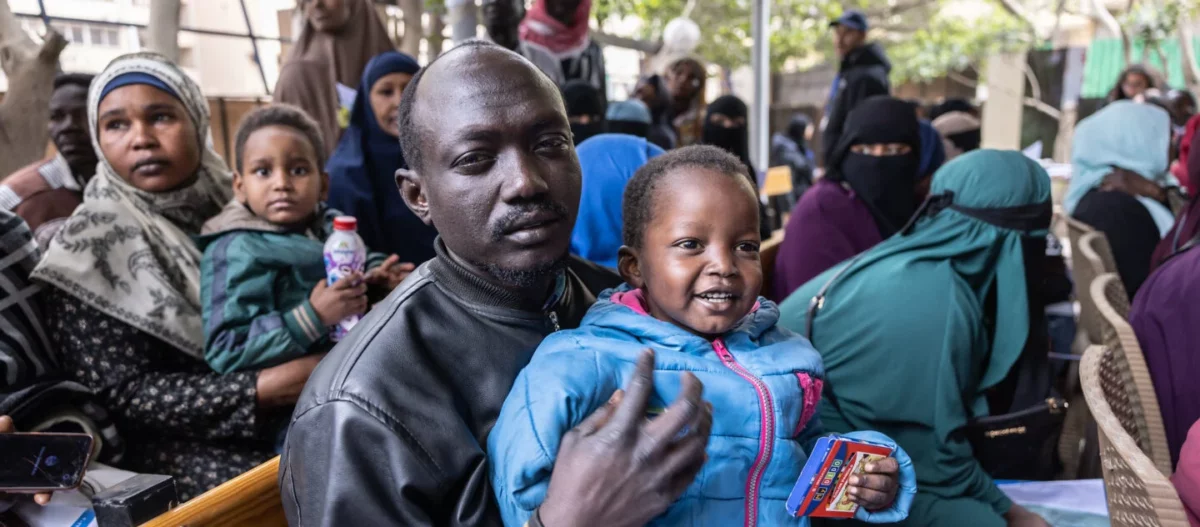
Egypt alone now hosts about 1.4 million Sudanese refugees, with registrations nearly quadrupling since 2023.
However, funding shortages have forced UNHCR to shut two of its three registration centres, limiting access to protection services. Available funding per refugee has also dropped sharply from $11 to $4 per month.
Conditions remain dire elsewhere. In eastern Chad, more than 71,000 refugee families lack housing support, while nearly 234,000 people awaiting relocation continue to live in precarious border conditions.
In Uganda, the closure of health facilities and suspension of key nutrition programmes in the Kiryandongo settlement have exposed thousands of refugees to heightened disease risks.
Despite the financial constraints, Mr Balde said the 2026 response plan “will continue to support host countries in providing critical basic services, including food, shelter, healthcare and protection services for new arrivals and the most vulnerable refugees.”
He warned that “the widening gap between rising needs and shrinking resources threatens to undermine both emergency response efforts and medium-term solutions,” and called for stronger international support to address persistent underfunding of humanitarian operations.
The appeal underscores growing concerns that without increased donor contributions, the capacity of host countries and aid agencies to respond effectively to the Sudan displacement crisis may be severely weakened.