President Bola Tinubu has forwarded the Medium Term Expenditure Framework (MTEF) and Fiscal Strategy Paper (FSP) for 2026–2028 to the House of Representatives for legislative consideration and approval.

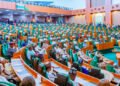
His communication, addressed to Speaker Abbas Tajudeen, was read during Wednesday’s plenary by the Deputy Speaker, Hon. Benjamin Kalu. Tinubu noted that the Federal Executive Council had approved the documents on December 3, 2025, adding that the 2026 federal budget would be prepared based on the fiscal assumptions and parameters contained in the approved framework.
The President appealed for swift legislative action, stating: “I am pleased to submit the 2026–2028 Medium Term Expenditure Framework and Fiscal Strategy Paper to the House for its consideration and approval.”
Tinubu cited Part II, Section 11(1) of the Fiscal Responsibility Act, 2007, which mandates the federal government, after consultations with states, to present a three-year MTEF to the National Assembly no later than four months before the start of a new financial year. Subsection (2) requires the National Assembly to review and approve the submitted framework, while subsection (3) outlines the mandatory inclusion of a Macro-Economic Framework containing three-year economic projections and analyses of the previous three years’ performance.
The Act also requires that the FSP outline the federal government’s medium-term financial objectives, policies on taxation, recurrent spending, debt servicing, capital expenditure, borrowing, investment, and its socioeconomic and developmental priorities. It must detail projected revenues based on a Commodity Reference Price, tax expectations, expenditure forecasts, debt statements, contingent liabilities, and strategies to manage them.
Section 12(1) further provides that the National Assembly’s approved aggregate expenditure must not exceed projected total revenue plus a deficit capped at three percent of GDP, except where the President determines that national security or sovereignty faces imminent danger.
House Moves to Halt Deductions on COVID-19 Loans
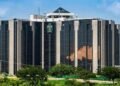
Meanwhile, the House of Representatives has urged the federal government, the Central Bank of Nigeria (CBN), NIRSAL Microfinance Bank, and the Federal Ministry of Finance to immediately suspend all deductions on the N419.42 billion COVID-19 intervention loans.
The House also called for a full waiver of outstanding loans owed by vulnerable households and micro-businesses, citing the severe economic hardship currently being faced nationwide.
These resolutions followed the adoption of a motion sponsored by Hon. Saidu Abdullahi.
Presenting the motion, Abdullahi recalled that the federal government, through the CBN and NIRSAL Microfinance Bank, introduced the COVID-19 Targeted Credit Facility (TCF) during the pandemic, disbursing N419.42 billion to households, micro, small, and medium enterprises. The programme reached 792,936 beneficiaries—674,972 households and 117,964 small businesses—with women accounting for 45 percent (330,128 beneficiaries supported with N159.21 billion).
He added that the initiative created or sustained approximately 1,585,872 jobs.
Abdullahi, however, expressed concern that as of September 2023, N261.07 billion (62 percent) of the loans remained unpaid, with N378.03 billion classified as outstanding. He cited recent CBN surveys showing increased default rates across household and enterprise lending due to inflation exceeding 24 percent, worsening food insecurity, declining purchasing power, business closures, and shrinking household income.
The lawmaker noted that although default rates were high in 2023, significant recoveries were made through unplanned automatic deductions from beneficiaries’ accounts between late 2023 and December 2025. This, he said, suggests that current outstanding exposure may be lower and “therefore fiscally manageable for a structured waiver.”
He emphasized that the TCF was designed as a survival support mechanism, not a traditional business loan. “Many households used the funds for essential needs such as food, shelter, healthcare, and school fees during the lockdown,” he said, adding that repayment remains unrealistic for citizens who have not recovered economically.
Abdullahi pointed to precedents such as the Anchor Borrowers Programme, where despite a default rate exceeding 50 percent, the federal government provided repeated restructuring and partial waivers. He noted that similar waivers were granted internationally during the pandemic, with the United States, Canada, Germany, South Africa, and India forgiving or restructuring large portions of COVID-19 relief loans.
He warned that continued automatic deductions and aggressive recovery efforts were worsening hardship among vulnerable Nigerians and could trigger business collapse, rising unemployment, and heightened social instability.
Following deliberation, the House resolved to:
“Urge the federal government, through the Central Bank of Nigeria, NIRSAL Microfinance Bank, and the Federal Ministry of Finance, to immediately suspend all deductions on COVID-19 intervention loans.”
It also resolved to:
“Direct the House Committees on Banking Regulations, Finance and Poverty Alleviation to liaise with the Central Bank of Nigeria (CBN), Federal Ministry of Finance, SMEDAN, and NIRSAL Microfinance Bank to ensure transparent, equitable, and efficient implementation of the waiver and restructuring framework.”