Sudan’s military announced on Saturday that it had seized several strategic buildings in central Khartoum from paramilitary forces, marking a significant advance in the ongoing conflict with the Rapid Support Forces (RSF). This follows army chief Abdel Fattah al-Burhan’s pledge for the “full liberation” of the capital after reclaiming the presidential palace.

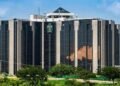
Army spokesman Nabil Abdallah confirmed that government forces were “continuing to pressure” RSF fighters in the city centre. Among the recaptured buildings were the Central Bank, state intelligence headquarters, and the Sudan National Museum.
Despite these gains, Sudan remains effectively divided, with the military controlling the east and north, while the RSF holds most of the western Darfur region and parts of the south.
As the battle rages in the capital, reports emerged of dozens of civilians killed in an RSF attack in North Darfur, far from the capital. Activists confirmed the attack but did not provide an exact casualty figure.
Paramilitary forces had taken control of national institutions in central Khartoum since April 2023, looting and occupying key government buildings in the early days of the conflict.
An RSF source confirmed to AFP that its fighters had “withdrawn from some locations in central Khartoum”, but insisted that “the battle has not been decided yet.”
“Our forces are now waging a fierce battle near the airport,” the source added, speaking on condition of anonymity.
While the army’s advance solidifies its control over parts of Khartoum’s city centre, it is unlikely to bring an end to the war.
The military’s latest offensive has secured the entire south side of the Blue Nile, which divides the capital from Khartoum North, as well as the main road linking central Khartoum to Omdurman across the White Nile.
Since April 2023, the conflict has pitted Burhan’s military against the RSF, led by his former deputy, Mohamed Hamdan Daglo. After suffering setbacks for over a year, the army gained momentum late last year, launching a counteroffensive through central Sudan that helped it regain much of Khartoum.
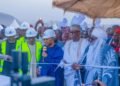
In a video released by the military on Saturday, Burhan assured soldiers and supporters that the army was “advancing with steady steps towards the full liberation of Sudan.”
“The battle is not over. We will continue,” he declared to cheering crowds in al-Kamlin, a town about 100 kilometres southwest of Khartoum.
Meanwhile, army sources reported that RSF fighters had retreated into al-Mogran, a commercial district west of the presidential palace, where they took up positions in high-rise buildings overlooking Omdurman and key government ministries.
The paramilitaries deployed snipers, intensifying resistance in the city centre.
“Our forces in central Khartoum are continuing to pressure the Daglo thugs … who are trying to escape from our forces,” said Abdallah, the army spokesman.
He further claimed that the army had “eliminated hundreds of militia members who tried to escape through pockets in central Khartoum.”
Analysts caution that even if the army regains full control of greater Khartoum, it would not signal the end of Sudan’s brutal war, which has killed tens of thousands and displaced over 12 million people.
With the army gaining ground in central Sudan, the RSF has intensified efforts to strengthen its hold on Darfur, where its resupply routes from Libya have been under attack by army-allied armed groups in recent months.
In North Darfur, activists reported that an RSF attack on Al-Malha town killed at least 45 civilians on Saturday. RSF claimed it had seized the town two days earlier.
Meanwhile, a local resistance committee in El-Fasher, the capital of North Darfur, said it was unable to identify 15 other victims from what it described as the “Al-Malha massacre.”