

South Carolina has carried out its first execution by firing squad in 15 years, putting Brad Sigmon, a 67-year-old convicted murderer, to death at the Broad River Correctional Institution in Columbia. Sigmon, sentenced for the brutal 2001 killings of his ex-girlfriend’s parents, David and Gladys Larke, was pronounced dead at 6:08 p.m. local time (23:08 GMT) on Friday after three state corrections officers fired specially designed bullets into his chest.

Sigmon’s execution marks the first use of a firing squad in the U.S. since 2010 and only the fourth instance of the method being used since 1977. South Carolina law permits inmates to choose between three execution methods—firing squad, electric chair, or lethal injection. With lethal injection drugs unavailable, Sigmon opted for the firing squad.
Chrysti Shain, spokesperson for the South Carolina Department of Corrections, confirmed that three members of the Larke family witnessed the execution, along with Sigmon’s spiritual adviser.
Sigmon, strapped into a metal chair with a red bullseye target placed over his heart, used his final statement to advocate for an end to capital punishment.
“An eye for an eye was used as justification to the jury for seeking the death penalty. At that time, I was too ignorant to know how wrong that was. Why? Because we no longer live under the Old Testament law but now live under the New Testament.”
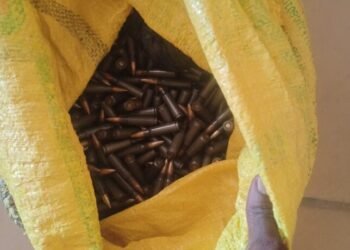
Following his statement, a hood was placed over his head. At 6:01 p.m., the curtain concealing the executioners opened, and at 6:05 p.m., three volunteers fired .308 Winchester Tap Urban bullets from 15 feet (4.6 meters) away, without a countdown.
Jeffrey Collins, a reporter for the Associated Press, described the scene, noting that Sigmon’s chest rose and fell several times before a doctor examined him for approximately 90 seconds and pronounced him dead.
WHFF-TV reporter Anna Dobbins described witnessing a “splash of blood” as the bullets struck and noted that Sigmon’s arms “flexed” upon impact. The bullets, designed to fragment upon entry, are intended to maximize damage.
Prison officials provided earplugs to witnesses to muffle the sound of gunfire. Counselling services were also offered to staff who may have been affected by the execution, according to Shain.
Sigmon’s lawyer, Bo King, fought for a last-minute stay of execution, arguing that South Carolina withheld key information about its lethal injection drugs.
“Brad only wanted assurances that these drugs were not expired, or diluted, or spoiled—what any of us would want to know about the medication we take, or the food we eat, much less the means of our death,” King said.
Condemning the use of a “bloody spectacle” in 2025, King argued that Sigmon had been rehabilitated in prison and should have been spared.
King also revealed that Sigmon requested three buckets of Kentucky Fried Chicken to share with fellow death row inmates as his last meal. This request was denied. Instead, he was served four pieces of fried chicken, green beans, mashed potatoes with gravy, biscuits, cheesecake, and sweet tea on Wednesday evening.
Ahead of the execution, anti-death penalty protesters gathered outside the prison in Columbia, holding signs that read “All life is precious” and “Thou shalt not kill.”
Under South Carolina law, witnesses observe executions from behind bulletproof glass, while the identities of the executioners remain protected. The state passed legislation in 2023 ensuring their anonymity.
Sigmon’s execution is the first firing squad execution in South Carolina’s history and signals a continued national debate over the morality and methods of capital punishment.