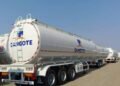
Vice President Kashim Shettima has declared that Nigeria is greater than any trade union, calling for patriotism and restraint in the wake of the recent dispute between the Petroleum and Natural Gas Senior Staff Association of Nigeria (PENGASSAN) and the Dangote Refinery.

Speaking on Monday at the 31st Nigerian Economic Summit (NES#31) in Abuja, themed “The Reform Imperative: Building a Prosperous and Inclusive Nigeria by 2030,” Shettima described the $20 billion Dangote Refinery as a national asset that must be protected and supported to operate at full capacity.
“Aliko Dangote is not an individual; he’s an institution, and a leading light in Nigeria’s economic parliament,” Shettima said. “How we treat this gentleman will determine how outsiders will judge us. If he had invested $10 billion in Microsoft, Amazon, or Google, he probably might be worth $70 to $80 billion by now. But he opted to invest in his country, and we owe it to future generations to jealously protect, promote, and preserve the interests of this great Nigerian.”
Shettima urged labour unions and the private sector to prioritise national interest in resolving disputes, warning against actions that could undermine the country’s economic progress.
“I wish to call for caution, retrospection, and a deeper sense of patriotism from both labour and the organised private sector in defining and improving the relationship between labour and industry in the interest of maintaining our steadily improving economic fortunes,” he said. “It’s not about holding the whole nation to ransom because of a minor labour dispute. Nigeria is greater than PENGASSAN. Nigeria is greater than each and every one of us.”
The Vice President’s comments come days after oil workers under PENGASSAN staged an industrial action over a dispute with the 650,000-barrels-per-day refinery, a project widely regarded as critical to Nigeria’s energy security and economic diversification.
Earlier, the Chairman of the Nigerian Economic Summit Group (NESG), Olaniyi Yusuf, highlighted that Nigeria’s foreign direct investment inflows remain weak despite marginal improvements in fiscal stability.
He stressed that the way Nigeria treats domestic investors would send a strong signal to international investors assessing the country’s business environment.
“How we treat domestic investors will provide the right signals for foreign investors,” Yusuf said.
He called on the government to ensure clarity, consistency, and transparency in economic policy, adding that investment protection, policy predictability, and credible dispute resolution mechanisms are essential to rebuilding investor confidence.
While acknowledging slight improvements in fiscal conditions, Yusuf noted that the economy still faces challenges such as high inflation, rising debt-service obligations, and subdued investor sentiment.