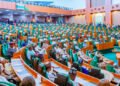
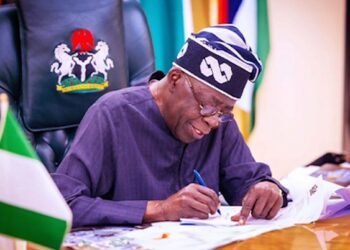
A bill proposing a six-year single term for Nigeria’s president and state governors was rejected in the House of Representatives.

The bill, sponsored by Honourable Ikenga Ugochinyere, aimed to amend the Constitution to provide for the rotation of the offices of president, governors, and local government chairmen among the country’s six geopolitical zones.
Additionally, the bill sought to consolidate all elections to be held on a single day.
During a vote on the bill’s second reading, the majority of lawmakers voted against it, effectively halting its progress.
This is not the first time a proposal for a six-year single term has been rejected by the House.
In 2019, a similar bill sponsored by John Dyegh from Benue State also failed to make it past the second reading.
Dyegh’s proposal had extended the six-year term to Members of the National Assembly and State Houses of Assembly, arguing that a longer term would allow lawmakers more time to gain experience and reduce the costly and violent nature of re-election campaigns.
Dyegh had also suggested that a five-year single term would help curb the irregularities often associated with re-election bids.
Former Vice President Atiku Abubakar also called for a constitutional amendment to introduce a six-year single term for the president across the six geopolitical zones.
His proposal included measures to mandate electronic voting, ensure the Independent National Electoral Commission (INEC) verifies candidates credentials, and make other reforms to the electoral process.
Anambra State Governor Prof. Chukwuma Soludo, earlier this year, echoed support for a single term for elected officials, noting that a fixed term could help reduce election-related distractions.
“Sometimes, these conversations about a single term might begin to make some sense, so that you fix it, whether you say four years, five years, six years, or seven years, a single term,” Soludo said.
“So, you are not thinking about the next election once you finish getting into this,” he stated.
He further emphasized the challenges of governance when constantly anticipating the next election cycle.