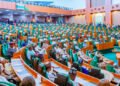
The House of Representatives has set up an ad-hoc committee to investigate the deteriorating security situation in the Federal Capital Territory (FCT) despite the federal government’s investment of $460 million in a CCTV project funded through a Chinese loan.

At the inauguration of the committee on Thursday in Abuja, Speaker Tajudeen Abbas described the surge in kidnappings, armed robberies and killings across the capital as “unacceptable and intolerable.” He noted that Abuja, once seen as one of West Africa’s safest cities, has now become a target for violent crime.
Represented by Rep. Julius Pondi, Abbas questioned why the multi-million-dollar surveillance system—designed to enhance monitoring and support security operations—has failed to stem the growing insecurity. He said Nigerians must be told whether the project was completed, abandoned or compromised through mismanagement.
The Speaker explained that the committee has been tasked with conducting a forensic review of the project, examining its operational capacity, integration with security agencies and the circumstances that led to its failure. It will also identify potential negligence or sabotage and recommend measures to activate or overhaul the system.
He urged the Ministers of the FCT, Finance and Interior, alongside the Inspector General of Police, area council chairmen and heads of security agencies, to cooperate fully with the probe. Traditional rulers were also encouraged to strengthen intelligence-sharing with security operatives.
According to Abbas, the House “will not stand idly by” while residents live in fear, adding that lawmakers will deploy every legislative tool available to ensure accountability and improve security across the FCT.
Committee Chairman Rep. Ojogo Kimikanboh said insecurity in the capital had turned Abuja into a “theatre of fear,” stressing that the committee’s work is a national responsibility to grieving families and anxious residents.
He described the failed CCTV initiative as a “scandal of monumental proportions,” noting that despite the enormous investment, the system has not provided the security cover envisioned for the FCT.
Ojogo outlined the committee’s mandate, which includes auditing the $460 million expenditure, assessing the project’s technical integrity, determining its level of functionality and uncovering why security breaches persist.
“We are not on a witch hunt but a truth hunt,” he said. “Our assignment will be pursued with diligence, integrity and a commitment to restoring public confidence.”
He added that the security challenges in Abuja are exacerbated by the contradiction of rising crime despite the huge funds committed to the CCTV project, which was expected to serve as an “ever-watchful digital sentinel” over the capital.
The committee is expected to track every dollar spent, review all contracts, verify the project’s true operational status, expose reasons for its failure, identify those responsible and propose actions to revive the project and improve security across the FCT.