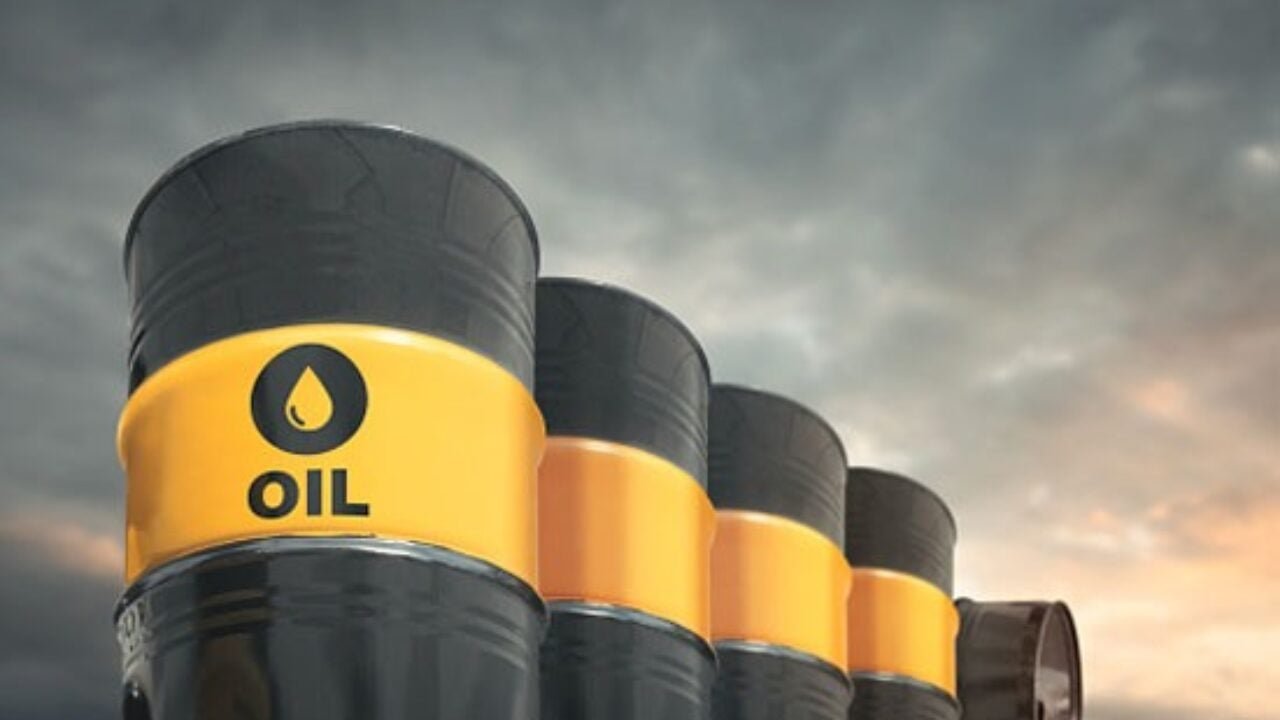
Nigeria’s crude oil production increased to 1.459 million barrels per day (bpd) in January 2026, according to figures submitted by the country to the Organisation of the Petroleum Exporting Countries (OPEC) and published in the group’s February 2026 Monthly Oil Market Report (MOMR) released on Wednesday.

The January output reflects a 37,000 bpd rise from December 2025 production of 1.422 million bpd and a rebound from November’s 1.420 million bpd, signalling renewed growth at the start of the year.
Data obtained through direct communication with OPEC show that Nigeria averaged 1.345 million bpd in 2024. Production improved in 2025 to an annual average of 1.453 million bpd, underscoring gradual recovery efforts in the upstream sector. OPEC’s figures, however, are based solely on crude oil and exclude condensate output.
The 37,000 bpd month-on-month increase represents one of the more notable gains among OPEC members during the period under review. Based on declared figures, Nigeria ranked behind only Saudi Arabia, Iraq, the United Arab Emirates and Kuwait within the cartel.
Saudi Arabia, OPEC’s largest producer, raised output by 16,000 bpd to 10.1 million bpd in January from 10.084 million bpd in December. Iraq increased production by 16,000 bpd to 4.097 million bpd, while the UAE recorded a 10,000 bpd rise to 3.383 million bpd. Libya posted a 6,000 bpd increase to 1.378 million bpd.
In contrast, Algeria trimmed output by 1,000 bpd to 971,000 bpd, while Congo reduced production by 6,000 bpd to 275,000 bpd. Equatorial Guinea and Gabon remained among the group’s smallest producers.
Despite recent production challenges, Nigeria retained its position as Africa’s leading oil producer within OPEC, ahead of Libya, Algeria, Congo and Equatorial Guinea.
The improvement comes amid sustained efforts to stabilise crude production through enhanced pipeline surveillance, intensified action against oil theft and the gradual reactivation of previously shut-in wells. In recent years, output had been hampered by vandalism, insecurity in the Niger Delta and underinvestment in upstream infrastructure.
Overall, OPEC reported a sharp decline in total alliance output last month due to losses in Kazakhstan, Venezuela and Iran. The 22-member alliance produced an average of 42.448 million bpd in January, representing a drop of 439,000 bpd compared to the previous month.
Meanwhile, the Group Chief Executive Officer of NNPC Ltd, Bayo Ojulari, has called for deeper Africa-wide collaboration to secure the continent’s energy future.
Speaking during a fireside chat with Mr Andy Brown, Deputy Chair of Ørsted and President of the Energy Institute, at the 2026 International Energy Week (IEW) in London on Wednesday, Ojulari identified shared infrastructure, policy alignment, coordinated investment frameworks, cross-border knowledge and technology exchange, integrated gas market development and sustained regional diplomacy among National Oil Companies (NOCs) as critical pillars for progress.
Highlighting the need for expanded cross-border infrastructure, Ojulari said NNPC’s ongoing regional gas projects illustrate how shared assets can unlock scale, efficiency and resilience. He emphasised the urgency of delivering major initiatives such as the Nigeria–Morocco Gas Pipeline and the expansion of the West African Gas Pipeline to boost regional integration and energy trade.
According to him, Africa must move towards harmonised pricing frameworks, transit protocols, local content standards and joint technical regulations, drawing lessons from reforms such as Nigeria’s Petroleum Industry Act (PIA), to ease investment bottlenecks and protect shared infrastructure.
Ojulari also advocated structured joint investment platforms among African NOCs, arguing that collective action would enhance the continent’s ability to attract and deploy capital.
“Our pathway is clear: grow production responsibly, scale gas as the backbone of Africa’s industrialisation, strengthen environmental accountability, and align with global decarbonisation objectives—while ensuring that Africans are not left behind in the energy transition,” he said.
The International Energy Week serves as a global platform bringing together policymakers, industry leaders, investors and innovators to deliberate on energy security, transition pathways, capital mobilisation and sustainability.