Nigeria currently ranks second on the global malnutrition index and first in Africa, according to the Senior Special Assistant to the President on Public Health, Uju Anwukah.

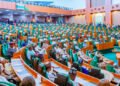
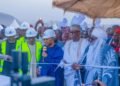
Anwukah made this known on Wednesday during her presentation on strengthening nutrition coordination in Nigeria through the N-774 initiative at the ongoing National Summit on Nutrition and Food Security. The summit is organised by the House of Representatives Committee on Food and Nutrition.
She explained that the N-774 initiative was adopted as a grassroots approach to tackling malnutrition and has been endorsed by both the National Council on Food Security and the Nigerian Governors Forum.
The grim statistics were further emphasized by the Chairman of the House Committee on Food and Nutrition, Hon. Chike Okafor, who revealed that malnutrition costs Nigeria an estimated $1.5 billion annually.
Okafor noted that the broader economic impact is even more alarming, with data from Nutrition International and the World Bank indicating that the cost of inaction amounts to about 12.2% of Nigeria’s Gross National Income, equivalent to $56 billion.
“Food insecurity has been aggravated by post-harvest loss, estimated at $2 billion annually by the Food and Agriculture Organisation (FAO),” Okafor said.
“This colossal loss alone is more than the nutrition budget of the Ministries of Agriculture, Health, Education, and Women Affairs put together. This continued loss is not only unacceptable, but unsustainable given the austere times in which we currently live.”
Okafor said the committee is partnering with stakeholders across Nigeria’s 36 states to implement a new strategic direction.
“First of all, we are undertaking strategic capacity-building sessions to have a better understanding of the root and dynamics of current nutrition and food security challenges in Nigeria. A wise man once said that once you are not informed, you are deformed.”
He added that the committee aims to institutionalise these sessions in collaboration with the National Institute for Democratic and Legislative Studies, with support from development partners.
“This will put us in a better position to provide strategic oversight to all nutrition and food-related interventions and implementing partners — including, but not limited to, the United Nations family, the World Bank, international and national NGOs, and all levels of government.
“By so doing, we will not only have more money for nutrition, but also more nutrition for the available money,” he concluded.
The summit continues as stakeholders seek urgent and coordinated responses to Nigeria’s worsening malnutrition crisis.