Bismarck Rewane, Managing Director of Financial Derivatives Company Limited, has raised concerns over the sharp rise in the price of beans, despite slight drops in the prices of other food commodities in recent days. Speaking on Channels Television’s Business Morning segment of the Sunrise Daily programme on Thursday, Rewane noted that while the cost of onions and rice has fallen to ₦115,000 and ₦110,000 per bag, respectively, beans have surged, becoming increasingly unaffordable.

“We’ve seen onions come down sharply to ₦115,000, and rice has also dropped to ₦110,000; it was as high as ₦120,000. The commodity that is surprising to everybody is beans; beans has gone out of storage and out of reach,” he stated.
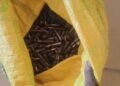
Market checks reveal that traders are selling a paint rubber of beans for ₦13,000, a derica for ₦3,000, and a full bag for as much as ₦180,000. Rewane attributed this price hike to recent flooding in major food-producing states such as Borno, Bauchi, and Sokoto. “Flooding has destroyed a lot of goods,” he explained, adding that transportation costs for moving agricultural produce have also risen due to the recent surge in petrol prices, now at ₦1,000 per litre, up from ₦600.
Rewane predicted that food inflation will likely worsen in the coming weeks, but expressed optimism that duty waivers on incoming imported commodities could help stabilize prices. “For now, despite everything, we think that inflation will still increase. Food inflation, in particular, will rise; headline inflation will increase to 34%, but this is only temporary. When the imported commodities that will benefit from the duty waivers arrive, those prices will start to reduce,” Rewane added.
President Bola Tinubu, in his Independence Day address on October 1, 2024, assured Nigerians that his government is working to restore peace in troubled northern regions to allow displaced farmers to return to their land and boost food production. “We expect to see a leap in food production and a downward spiral in food costs. I promise you, we shall not falter on this,” Tinubu said during his broadcast marking Nigeria’s 64th Independence Anniversary.
Surging Inflation Amid Economic Crisis
Nigeria is grappling with one of its worst economic crises in recent memory, driven by soaring living and energy costs, following the government’s removal of the petrol subsidy and the unification of the foreign exchange market in May 2023. The National Bureau of Statistics (NBS) reported an inflation rate of 32.15% in August 2024, with food inflation at a staggering 37.52%, up 8.18 percentage points from August 2023. The rise in food inflation has been attributed to higher prices for staples like bread, maize, cereals, yams, palm oil, and vegetable oil.
Despite palliative measures introduced by the Tinubu administration and state governors, many Nigerians continue to struggle under the weight of escalating inflation, as the prices of food and basic goods remain unchecked.