The Federal Government has distanced itself from the recent hike in the pump price of petrol, stating that it is not responsible for the increase.

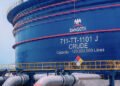
On Wednesday, the Nigerian National Petroleum Company Limited (NNPCL) raised petrol prices across the country. In Abuja, the price jumped from N897 to N1,030 per litre, while in Lagos, it increased from N855 to N998. In other regions, such as the North-East, prices surged to N1,070, in the South-West to N1,025, in the South-East to N1,045, and in the South-South to N1,075 per litre.
The price hike sparked outrage among Nigerians, with many calling on President Bola Tinubu to intervene and reverse the increases.
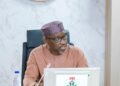
However, in an interview with Daily Trust, Minister of Information and National Orientation, Mohammed Idris, clarified that the federal government had no involvement in the decision. He explained that the NNPCL acted independently, in line with market conditions and the provisions of the Petroleum Industry Act (PIA), which removes the government’s authority to fix petroleum product prices.
“The NNPCL made this decision based on current realities in the energy sector. The federal government no longer controls fuel prices. The removal of the subsidy, which has been in place since May 2023, means NNPCL has been absorbing the cost differences. They can no longer do so without incurring significant losses,” Idris said.
He further highlighted that global factors, including the ongoing crisis in the Middle East, have led to market volatility, impacting the cost of petroleum products. “This price fluctuation is not unique to Nigeria. It mirrors global trends in the industry. The NNPCL, as a limited liability company, cannot continue to operate at a loss,” he added.
The minister appealed to Nigerians for patience and understanding, assuring them that prices would eventually stabilize. He also emphasized that the savings from subsidy removal would be reinvested into critical sectors such as healthcare, education, infrastructure, and security.
Additionally, Idris mentioned that the government’s investment in Compressed Natural Gas (CNG) and the involvement of more operators in the sector would help mitigate the long-term effects of the price hike.