The death toll from Saturday’s petrol tanker explosion at Dikko Junction in Niger State, climbed to 86, with 55 individuals injured and receiving medical attention.

Initially reported as 70 fatalities and 50 injuries, the number of casualties increased after more bodies were recovered.
A mass burial was conducted for the victims in Dikko, Niger State.
The Director-General of the Niger State Emergency Management Agency (NSEMA), Abdullahi Baba-Arah, confirmed this development in a statement on Sunday.
“A total of 86 persons have been confirmed dead, with their corpses recovered and buried,” he said.
Baba-Arah explained that 80 victims were buried in a mass grave at the premises of Dikko Primary Healthcare Centre, while five were claimed by their relatives for private burials.
Another victim succumbed to injuries at Dikko PHC.
“The mass burial was carried out by NSEMA in collaboration with Gurara Local Government Area and courageous volunteers between 5 p.m. and midnight,” he added.
The tragic incident occurred early Saturday morning when a speeding fuel tanker lost control and crashed at Dikko Junction, located between Niger and Kaduna states.
As residents attempted to collect fuel spilling onto the road, the tanker exploded, resulting in a massive fire that killed both those scooping fuel and others trying to assist.
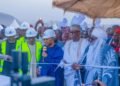
Governor Mohammed Umar Bago visited the site of the explosion on Saturday and announced immediate measures to prevent similar incidents.
He directed that vehicles from the Maje axis must no longer use the Dikko Bridge, requiring them to take the underpass and follow proper U-turn procedures.
“Niger State Government has directed that no vehicle coming from the Maje axis should be allowed to pass over the Dikko Bridge,” said Bologi Ibrahim, the governor’s Chief Press Secretary, in a statement.
The governor decried the recklessness of drivers, emphasizing that strict enforcement is necessary.
He also instructed the Federal Road Safety Corps (FRSC) to establish a detachment in the area to ensure compliance and called on transport unions to cooperate with the FRSC.
In addition, Governor Bago expressed gratitude to NSEMA, the Fire Service, FRSC, and the Union of Road Transport Workers for their efforts in evacuating victims.
He announced plans to redeploy doctors from Minna hospitals to Suleja General Hospital to assist in treating the injured.
This tragedy underscores the urgent need for stricter traffic regulations and public awareness to prevent fuel-related disasters in the future.