Former Nigerian President, Olusegun Obasanjo, has urged African nations to unite and strengthen their economic ties for the continent’s growth, emphasizing that Africa’s future depends on economic liberation.

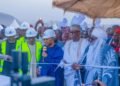
Obasanjo made this call on Tuesday during an event in Lagos commemorating Angola’s National Founder and Hero’s Day 2024, held annually on September 17 to honor the legacy of Angola’s first President, Agostinho Neto. The event, themed “Pan-Africanism in the Political Course by Agostinho Neto,” was organized by the Angolan Embassy in Nigeria.
Obasanjo noted that while Africa has made strides in political and cultural integration, economic pan-Africanism remains an area requiring urgent attention.
“We have achieved political and cultural pan-Africanism to an extent, but now we have to focus on the economic liberation of Africa,” Obasanjo stated. “Our pan-Africanism must be strong. When we were formulating the charter for a new African Union from the Organisation of African Unity, we dwelt more on economic ties.”
The former African Union (AU) chairman stressed that economic strength is key to Africa’s progress. He highlighted the history of exploitation faced by the continent, from the slave trade to colonialism, and noted that economic dominance by foreign powers continues to hinder Africa’s development.
“One of the reasons for the slave trade was the need for energy to develop other parts of the world,” he explained. “The slave trade was replaced by colonialism, and now, despite political independence, Africa still struggles with economic exploitation. Economic pan-Africanism is the key to the continent’s liberation, and we must prioritize this.”
Obasanjo also praised former Cuban President Fidel Castro for his role in Angola’s liberation and recalled Nigeria’s support for the Angolan government, including a financial contribution of $20 million during the country’s struggle for independence.
“As long as we remain economically weak, Africa is going nowhere. We cannot achieve this alone; pan-Africanism today should focus on the economic liberation of the continent,” he stressed.
Angola’s Ambassador to Nigeria, José Zau, reflected on Neto’s legacy, noting that his principles continue to shape African unity. He emphasized the significance of holding the event in Lagos, where Neto was awarded a Doctor Honoris Causa by the University of Lagos in the 1970s during Obasanjo’s regime.
Foreign Affairs Minister Yusuf Tuggar, represented by Olamide Adediro, reaffirmed Nigeria’s commitment to strengthening its ties with Angola and the broader African continent. He emphasized that Nigeria shares Neto’s vision of a united and self-reliant Africa.
“Nigeria is proud to have played a role in supporting Angola’s independence struggle,” Tuggar said. “Neto’s vision of a united and self-reliant Africa is one we share with our Angolan brothers and sisters. The liberation of Angola was not only a triumph for the country but for all of Africa and the black race.”