The Transmission Company of Nigeria (TCN) has reported another act of vandalism disrupting repair efforts on its Ahoada-Yenagoa 132kV transmission line, which was already undergoing restoration following a prior attack.

In a statement released on Friday in Abuja, TCN’s General Manager for Public Affairs, Mrs. Ndidi Mbah, disclosed that the latest incident occurred on Tuesday night, affecting towers 29 to 31. Approximately one-third of the line’s conductor was stolen during the attack.
“A team of TCN engineers, led by Mr. Emmanuel Akpa, General Manager of the Port Harcourt Region, inspected the site and confirmed the extent of the damage,” Mbah said.
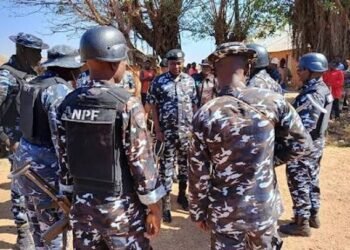
To deter further vandalism during ongoing repairs, security measures have been intensified at Ula Ikata in Ahoada East Local Government Area, where the site is located.
“Local security personnel have been deployed to secure the area, and the line will be energized from the Ahoada end as an additional safeguard,” she explained.
Despite challenges posed by difficult terrain and flooding, Mbah noted that efforts to replace the stolen 250mm conductor are progressing steadily, with about 85% of the restringing work completed.
Mbah also highlighted an earlier incident in November when vandals attacked 31 transmission towers in the Okada and Ofosu communities along the 330kV Benin-Egbin and Benin-Omotosho lines. These towers suffered extensive damage, with critical components removed, further threatening the national grid’s stability.
“TCN engineers from the Benin Sub-Region initiated emergency repairs to prevent the collapse of the affected towers and avert power supply disruptions,” Mbah stated.
These repeated acts of vandalism underline the urgency of tackling the growing menace affecting Nigeria’s power infrastructure. “TCN calls on the public to support efforts to address these crimes, which have significantly hindered the expansion and stability of the national grid,” she appealed.
Mbah reiterated TCN’s commitment to safeguarding critical infrastructure, emphasizing the need for cooperation with local communities and security agencies to ensure the integrity of the country’s power network.
(NAN)