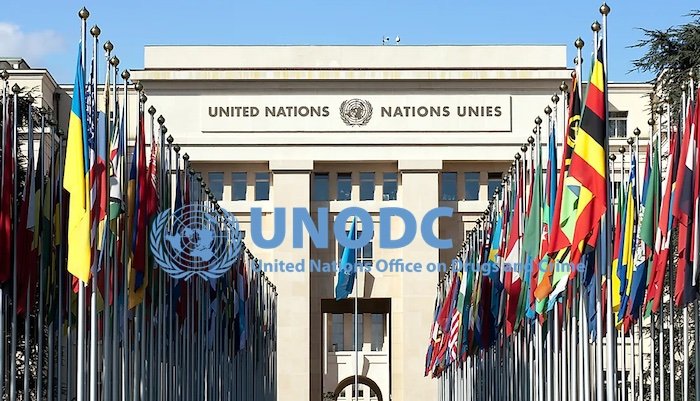
The United Nations Office on Drugs and Crime (UNODC) has unveiled a comprehensive five-year strategy aimed at strengthening Nigeria’s response to crime, corruption, terrorism, and drug-related challenges.

The initiative, known as the Nigeria Country Programme 2026–2030, was presented during a media dialogue in Abuja, where UNODC officials outlined a coordinated framework to address evolving security and governance threats across the country.
Speaking at the event, UNODC Country Representative Cheikh Toure said the programme reflects a more strategic and integrated approach to tackling complex and interconnected issues such as organised crime, corruption, and violent extremism.
“Over the years, you have not only reported on our work; you have amplified critical issues, shaped public understanding, and helped draw both national and international attention to the challenges of drugs, crime and terrorism in Nigeria,” he said.
According to Toure, the new strategy is the first comprehensive framework of its kind for Nigeria and is designed to strengthen institutional capacity across key sectors.
The programme focuses on four major pillars: justice and the rule of law, security and counter-terrorism, anti-corruption and governance, and the protection of vulnerable populations.
It also outlines five strategic outcomes, including improving criminal justice systems, combating illicit financial flows, enhancing security responses, addressing organised crime, and promoting evidence-based approaches to drug control.
UNODC emphasised that the strategy adopts a holistic approach, combining legal, social, economic, and security interventions while incorporating forward-looking measures to address emerging threats such as cybercrime and environmental crime.
Toure noted that the programme prioritises inclusivity, human rights, and gender sensitivity, ensuring that interventions benefit all segments of society, particularly vulnerable groups.
He added that while the challenges ahead remain significant, sustained collaboration between government, civil society, and the media will be critical to the programme’s success.
“The road ahead will not be easy, but the foundation is strong, the partnerships are real and the commitment is unwavering,” he said.
The strategy aligns with broader international development frameworks, including the Sustainable Development Goals and regional priorities, reinforcing Nigeria’s ongoing efforts to strengthen governance, security, and the rule of law. �
THISDAYLIVE