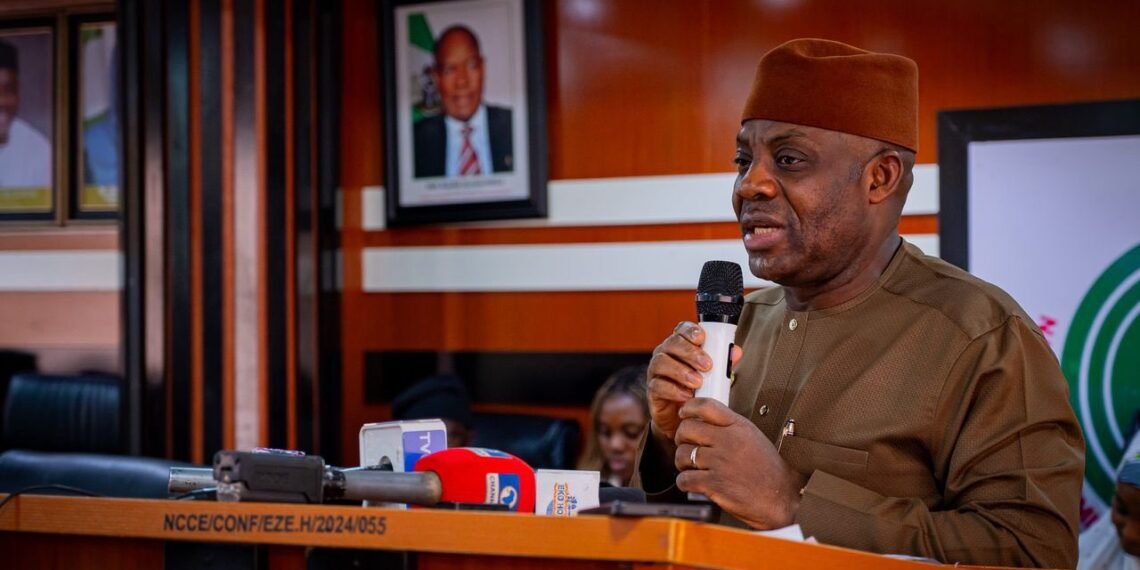
Nigeria will require an estimated $345 million annually to tackle its growing out-of-school children crisis, Minister of Education Tunji Alausa has said.

The minister disclosed this during a private sector engagement in Lagos, noting that the funding is necessary to reintegrate and equip approximately 15 million children currently outside the formal education system.
According to him, the estimate reflects the per capita cost of addressing the needs of affected children nationwide.
Highlighting the scale of the challenge, Alausa revealed that about 25 per cent of Nigerian children aged between five and 14 are out of school, with the situation more severe in the North-East and North-West, where the figure rises to 41 per cent.
He stressed that while government initiatives under the Nigeria Education Sector Renewal Initiative have made progress, additional funding remains critical.
“The challenges in the Nigerian education sector present a marked opportunity to increase access, improve quality, and enhance systems,” he said.
The minister also linked education reforms to the Federal Government’s broader economic ambitions, noting that the sector is central to the “Renewed Hope” agenda aimed at building a $1 trillion economy by 2030.
As part of ongoing efforts, the government has invested in technical and vocational training, disbursing over ₦10.6 billion to training centres and ₦3.4 billion to trainees. It has also committed more than ₦156 billion to rehabilitate medical and engineering institutions across the country.
Alausa further called for stronger collaboration with the private sector, emphasising that public resources alone cannot bridge the funding gap.
“Government alone cannot achieve the scale of transformation required,” added Minister of State for Education, Suwaiba Ahmad, underscoring the need for broader partnerships.
With millions of children still excluded from formal education, stakeholders warn that sustained investment and coordinated action will be essential to reverse the trend and secure Nigeria’s long-term development.