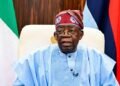
President Bola Ahmed Tinubu has defended his administration’s decision to remove the fuel subsidy, stating that the move is intended to free up resources for essential investments in Nigeria’s infrastructure and social services. He emphasized that the government’s economic reforms are aimed at restoring confidence in the country’s financial stability.

The President made these remarks during the opening of the 17th Annual Chartered Institute of Bankers of Nigeria (CIBN) Banking and Finance Conference, held on Tuesday in Abuja. Represented by Vice President Kashim Shettima, Tinubu addressed the nation’s economic challenges, acknowledging that the reforms, though painful in the short term, are necessary for long-term growth.
“We have taken bold steps to reform the macroeconomic environment. Our focus is on restoring confidence in the Nigerian economy through measures aimed at reducing inflation, stabilizing the foreign exchange market, and improving fiscal management,” the President said.
He further explained that the removal of fuel subsidies will free up budgetary resources for critical investments in infrastructure and social services. “Though painful in the short term, the removal of fuel subsidies is designed to free up budgetary resources for critical investments in infrastructure and social services, frequent adjustment of the monetary policy rate, and fostering a more market-oriented exchange rate system,” he added.
Tinubu also reaffirmed the government’s commitment to implementing reforms that will enhance macroeconomic stability, reduce inflation, and support infrastructure development.
Earlier, the President and Chairman of CIBN, Prof. Pius Deji Olanrewaju, called for urgent reflection on Nigeria’s economic challenges, urging innovative solutions to drive growth. “We are on a journey to economic growth and prosperity,” Olanrewaju said, while acknowledging that the current challenges require immediate attention.
He highlighted the importance of professionalism and patriotism among financial sector operators for the successful implementation of the Central Bank of Nigeria’s (CBN) policies aimed at addressing economic issues.
In his goodwill message, the Chairman of the Economic and Financial Crimes Commission (EFCC), Ola Olukoyede, pledged the agency’s commitment to sanitizing the financial system and fighting financial crimes. He urged bankers to prioritize national interest over profit and renew their commitment to services that promote economic development and nation-building.