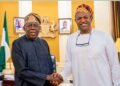
Chairman of the Presidential Fiscal Policy and Tax Reforms Committee, Mr. Taiwo Oyedele, has said Nigeria would have achieved a $1 trillion economy by now if the current tax reform initiatives had been implemented ten years ago.

Speaking at the PwC “Executive Summit on Nigeria’s Tax Reform” held in Lagos on Monday, Oyedele emphasized that previous policy failures—including exchange rate mismanagement and prolonged fuel subsidy payments—had severely hampered economic progress.
“If some of these reforms done in the past two years ago were implemented, I tell you authoritatively that Nigeria’s $1 trillion economy is guaranteed and the price of PMS will be under N300 per litre because the foreign rate will be under N300 against the dollar,” he stated.
He warned that Nigeria had been on the brink of economic collapse, likening its trajectory to that of Venezuela and Zimbabwe, and stressed that the country was saved by timely policy interventions under President Bola Tinubu.
According to Oyedele, “We’ve done this analysis over the last 10 years, comparing balance of payments between Nigeria, Kenya, and South Africa. Yet, the Naira has lost six and a half times more value than Kenya’s Shilling and South Africa’s Rand. If only we had maintained that level of stability, Nigeria would be a $1 trillion economy. The middle class would be ten times larger, and every single investor would take us seriously.”
Oyedele disclosed that before the reforms, 97 percent of federal revenue was being used to service debt, and the tax-to-GDP ratio stood below 10 percent. However, he noted that the tax-to-GDP ratio has now risen to 13.5 percent under the Tinubu administration, while debt servicing has fallen to under 50 percent.
“We no longer print money to spend. Rather, we have paid down half of the Ways & Means that the past administration printed,” he said.
Describing the reforms as the most consequential since independence, Oyedele stressed that countries like South Africa and Rwanda have overtaken Nigeria in revenue generation, despite Nigeria’s wealth in human capital and resources.
“In Nigeria, we have what it takes in terms of human capacity, knowledge, and skills. We were missing the political will—until we found it. The reforms have been painful, but they’re beginning to yield positive micro results,” he added.
He explained that the tax reform initiative is not solely about generating revenue for the government but is a direct consequence of broader economic activities.
On the new exemption thresholds for small businesses, he said, “We have been told this story for so long. It turns out that story is not valid. In most countries with inequality like Nigeria, you’ll find that the top 12 percent pay more than the 99 percent at the bottom.”
Looking ahead, Oyedele said the next phase of the tax reforms, expected to take off in January 2026, is designed to further stimulate business and household growth.
“Businesses, households, and individuals will benefit. The government will benefit also. We can build a prosperous Nigeria together. I can tell you, from what I have seen, that better days are ahead of us,” he concluded.
Earlier, Mr. Sam Adu, Regional Senior Partner at PwC West Market Area, described the recently signed 2025 Tax Act as the most comprehensive tax overhaul in Nigeria’s history.
“Nigeria has just completed the most ambitious overhaul of its tax system in decades. Perhaps this is the most ambitious tax reform anywhere in the world. This is not just about compliance—it’s about building a fairer, more transparent, and growth-oriented tax system,” Adu said.
He noted that globally, smarter taxation is being driven by advances in technology, sustainability goals, cross-border cooperation, and shifting geopolitical trends.