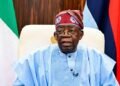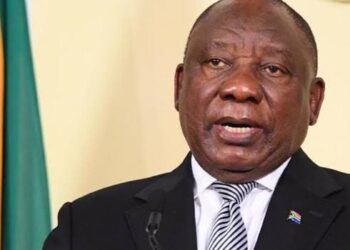


President Bola Tinubu on Thursday reaffirmed his commitment to protecting Nigerians’ democratic rights, particularly the freedom of speech, even amid growing concerns over press freedom and the harassment of critics.

Delivering his Democracy Day address at the National Assembly Complex in Abuja, Tinubu urged security agencies not to clamp down on individuals critical of his administration’s policies, asserting that democracy thrives on tolerance—even for dissent.
“Democracy requires a fair degree of tolerance for harsh words and stinging insults,” the President declared before a joint session of lawmakers. “Call me names, call me whatever you will, and I will still call upon democracy to defend your right to do so.”
He also cautioned his political allies and members of the National Assembly against authoritarian tendencies, stressing the importance of dialogue and persuasion over force and intimidation.
“Be tolerant and broad-minded in your legislative action regarding speech and civil liberties,” Tinubu said.
Despite his remarks, the administration has come under scrutiny for the arrest and detention of several journalists under laws such as the Cybercrime Prohibition Act, 2015. Critics say this trend runs counter to Chapter 4, Section 39 of the 1999 Constitution, which guarantees freedom of expression and the right to receive and impart information without interference.
In just the first two years of Tinubu’s presidency, journalists including Daniel Ojukwu, Adejuwon Soyinka, and Segun Olatunji have been detained by state security operatives—actions condemned by pro-democracy groups, the Nigeria Union of Journalists (NUJ), and the International Press Institute (IPI Nigeria) as reminiscent of Nigeria’s military dictatorship era.
Civil society organisations have also raised concerns about what they describe as “Gestapo-style” arrests, warning that such practices threaten Nigeria’s hard-earned democratic gains 26 years after its return to civilian rule.
In his third Democracy Day address since taking office on May 29, 2023, Tinubu said his administration would continue to champion civil liberties, even when subjected to public criticism.
“Do not be afraid to hear an unkind word spoken against you. Some of the best advice a politician gets sometimes comes from his most ferocious opponents,” he noted. “We dare not seek silence because the imposed silence of repressed voices breeds chaos and ill will, not the harmonics of democracy in the long term.”
While acknowledging the need to address slander and libel appropriately, Tinubu cautioned against unjust persecution.
“No one should bear the brunt of injustice for merely writing a bad report about me or calling me names,” he said.
He further emphasised his belief in Nigeria’s democratic resilience: “Our nation is not perfect, but it is strong. Our democracy is not invincible, but it is alive. And this means our dream of a prosperous, happy nation is still within reach and worth fighting for.”
Addressing speculations that Nigeria is drifting toward a one-party system, the president dismissed such concerns as unfounded.