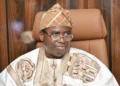
The Chairman of the Code of Conduct Tribunal (CCT), Dr. Mainasara Umar Kogo, called for decisive military action to combat insecurity in Northern Nigeria, including the bombardment of nine forests that serve as hideouts for terrorists and bandits.

Speaking at the 2025 Sir Ahmadu Bello National Annual Memorial Conference, held on Saturday at Arewa House, Kaduna, Kogo urged the government to prioritize security by addressing the roots of terrorism and criminality in the region.
The conference, themed “Nigeria’s Leadership for National Cohesion and Stability under Contemporary Governance,” brought together dignitaries from across Northern Nigeria to discuss pressing national challenges.
In his address, Kogo emphasized the urgent need to eliminate terrorist hideouts, identifying nine forests as strongholds of criminal elements: Sambisa (Borno), Mandara Mountains (near Lake Chad), Falgore (Kano), Rugu (Katsina), Sabon Birni (Sokoto), Dansadau (Zamfara), Birnin-Gwari (Kaduna), Kontagora (Niger), and Birnin Kogo (Katsina).
“Decisive action is necessary to address the security challenges facing our nation.
We cannot continue to tolerate the activities of terrorists and other criminal elements that threaten our national security,” Kogo stated.
Kogo recommended that the forests be transformed into industrial agricultural zones, which would generate jobs for youths, stimulate economic growth, and reduce hunger.
He suggested industries such as textiles, food production, and oil milling as potential developments in these zones to boost foreign exchange and economic activities.
The CCT chairman also called for a comprehensive overhaul of Nigeria’s security framework, advocating for amendments to constitutional provisions governing the Nigeria Police Force.
Specifically, he proposed amending sections 214–216 of the Constitution to redefine the roles of the police and sections 217–219 to facilitate collaboration with other security agencies.
Kogo further suggested establishing specialized security units, such as the “National Border Security Police, National Ports Police, National Airports Police, National Cyber Crime Police,” and “National Anti-Terrorism Police,” to address specific security challenges.
In addition, he stressed the need for an audit of the country’s security expenditure over the past two decades to ensure accountability and transparency.
“Several container loads of arms and ammunition have been intercepted at various times, alongside arrests of informants and international collaborators.
However, we are yet to see any convictions.
Nigeria’s leadership must be willing to take decisive action against these elements,” Kogo remarked.
Ahmed Abdullahi, National President of the Gamji Heritage Association, also spoke at the conference, highlighting the enduring legacy of the late Sir Ahmadu Bello.
He noted the development of institutions like Arewa House, Ahmadu Bello University, and the Kainji and Jebba Hydroelectric Projects as transformative achievements.
Abdullahi acknowledged the current challenges facing Nigeria, including insecurity, economic hardship, and currency devaluation, and called on leaders to take meaningful steps to alleviate the suffering of Nigerians.
“Our commitment to progress remains unwavering.
With Allah’s guidance, we will overcome these challenges and build a stronger, united Nigeria,” he said.
Other notable speakers included Ambassador Ibrahim Mai Sule, Vice Chairman of the Arewa Consultative Forum, and Prof. Abubakar Saddique Mohammed, Director-General of the Centre for Democratic Development Research and Training, Zaria.
The conference provided a platform to reflect on Northern Nigeria’s history and explore strategies for fostering national cohesion and stability in contemporary governance.