

The United States Supreme Court has ruled that former President Donald Trump exceeded his authority when he imposed sweeping tariffs on Nigeria and 184 other countries, describing the measures as unlawful and beyond executive powers.

In a 6–3 decision on Thursday, the apex court held that Mr Trump’s reliance on the International Emergency Economic Powers Act (IEEPA) — a 1970s-era statute intended for use during national crises — did not legally empower the president to levy broad tariffs without explicit approval from Congress.
Delivering the majority opinion, Chief Justice John Roberts emphasised the constitutional limits of presidential authority over trade policy, arguing that unilateral tariff powers rest with the legislature, not the executive. The court majority said the emergency law “falls short” of granting the president the ability to impose import levies of unlimited scope, duration or amount.”
Trump dismisses ruling, criticises justices
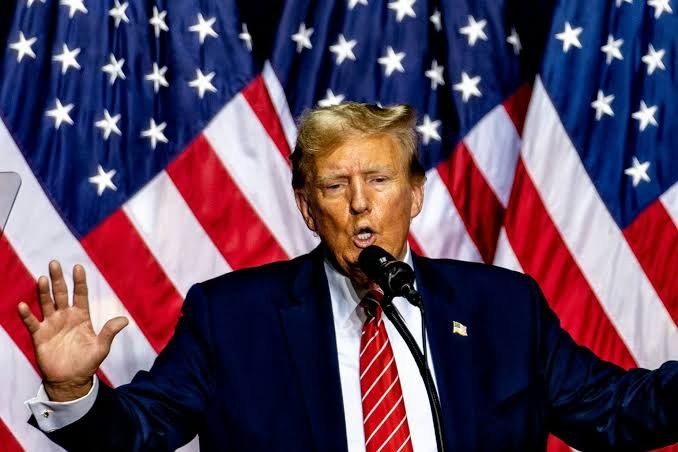
Reacting to the verdict at the White House on Friday, Mr Trump called the decision “deeply disappointing” and voiced anger at some of the justices. “The Supreme Court’s ruling on tariffs is deeply disappointing, and I’m ashamed of certain members of the Court, absolutely ashamed, for not having the courage to do what’s right for our country,” he said.
The tariffs, first announced on April 2, 2025 — a date Mr Trump dubbed “Liberation Day” — initially imposed a baseline 10 per cent levy on all imports, with higher reciprocals on countries with significant trade deficits with the US. Nigeria was among the nations hit with a 15 per cent tariff under the policy.
Legal and economic implications
The court clarified that its decision specifically invalidates the so-called “Liberation Day” tariffs imposed under emergency powers, not necessarily every tariff the administration may have enacted under other statutory authorities.
Legal analysts said the ruling preserves the constitutional balance between Congress and the President on trade matters but leaves open debate on how the executive branch may pursue tariffs through other, more narrowly defined laws.
Notably, the Supreme Court did not address whether tariffs already collected must be refunded, a question that could have major financial implications for companies and federal revenue.