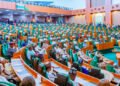


Committees of the United States Congress convened a high-profile session on Wednesday to examine alleged killings and religious violence in Nigeria, a topic that has sparked international debate and diplomatic tensions.

The joint hearing brought renewed focus to Nigeria’s complex security situation, where lawmakers and experts discussed testimony warning that continued violence could escalate sectarian tensions and endanger vulnerable communities.
Panel Focuses on Nigeria’s Security Crisis and Religious Violence
According to reports, members of Congress stressed increasing concern over the targeting of faith communities and broader insecurity in Nigeria, describing the situation as “a major global flashpoint” and urging deeper scrutiny of the federal government’s efforts to protect citizens.
One lawmaker at the hearing warned that if recent trends persist, there is potential for widespread conflict, while others framed religious freedom as central to global security policy.
The discussion occurred against the backdrop of ongoing violence by extremist groups such as Boko Haram and Islamic State West Africa Province (ISWAP), which have carried out attacks in several Nigerian regions.
Nigeria’s “Country of Particular Concern” Status Remains at Centre of Debate
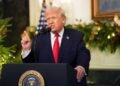
The session follows U.S. President Donald Trump’s designation of Nigeria as a “Country of Particular Concern” (CPC) under U.S. law, a label reserved for nations accused of severe religious freedom violations.
This designation has drawn both support and criticism in Washington, with some lawmakers backing stronger action while others caution against oversimplifying Nigeria’s security landscape.
Critics of the CPC narrative argue that insecurity in Nigeria affects people of all faiths and results from a mix of terrorism, communal conflict and criminality rather than purely religious persecution.
However, proponents of the designation say that testimony from Nigerian religious leaders and security analysts provides evidence of targeted violence that must be addressed.
Broader U.S.–Nigeria Security Cooperation Under Scrutiny
The hearing coincided with ongoing U.S.–Nigeria security cooperation, including recent announcements that the U.S. has dispatched a small military team to support counterterrorism efforts.
Analysts say this reflects growing American concern over Nigeria’s internal violence, even as Abuja continues to reject claims that its government permits widespread religious persecution.
The Congressional session underscores heightened international attention on Nigeria’s security challenges and the handling of religiously sensitive violence, with implications for foreign policy, bilateral relations, and humanitarian priorities.