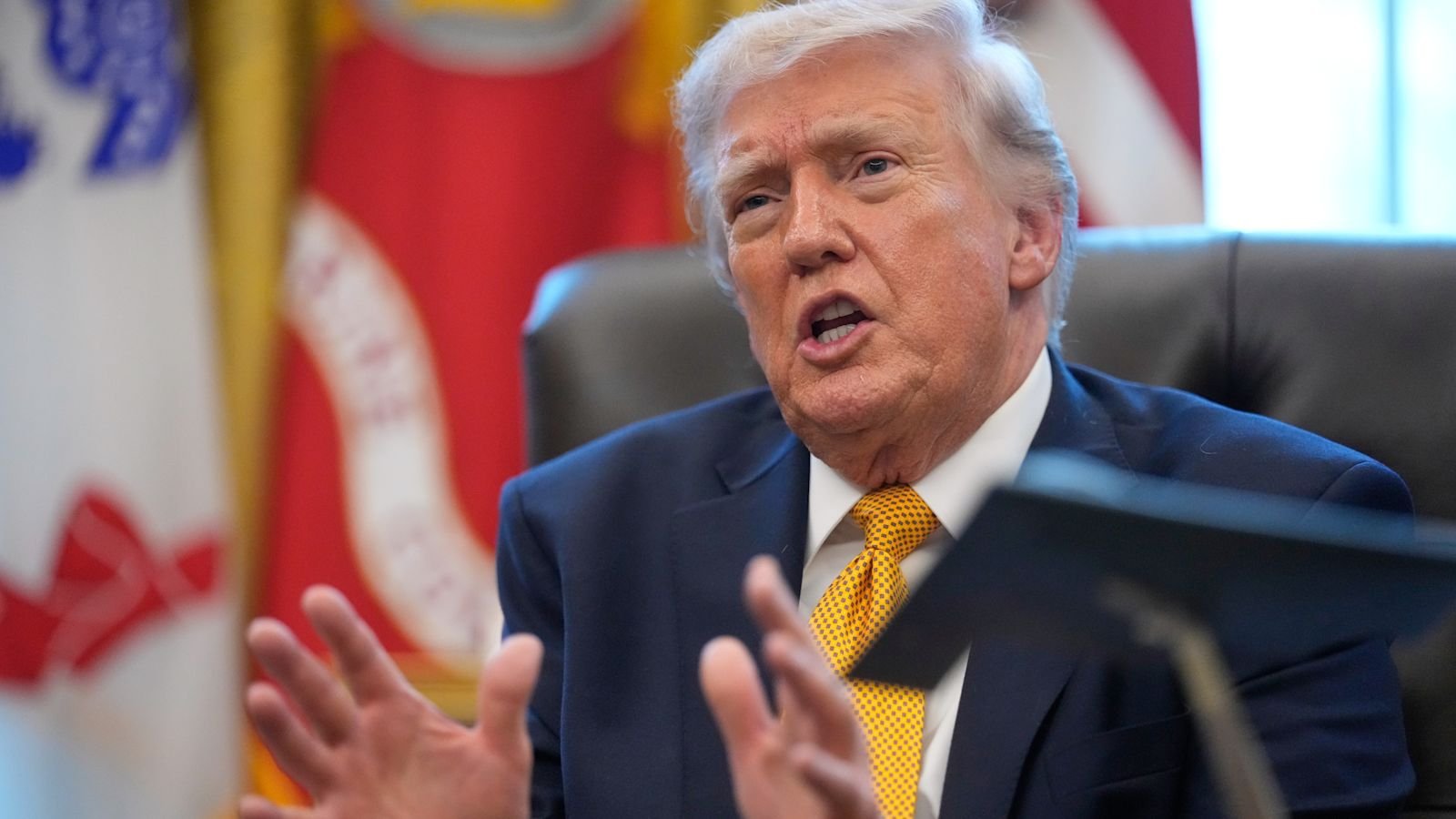
United States President Donald Trump has indicated that negotiations between the United States and Iran could resume within days, raising cautious optimism over possible de-escalation amid heightened tensions in the Middle East.

Speaking in a preview of an interview with Fox News, Trump said discussions with Iran may restart in Pakistan “in the next two days,” although Iranian authorities have yet to publicly confirm the development.
The US president also struck an optimistic tone regarding the broader conflict, stating that the war is “very close to over,” despite ongoing military operations across multiple fronts in the region.
Vice-President JD Vance reinforced the administration’s diplomatic approach, disclosing that Washington is pursuing a comprehensive agreement with Tehran.
He said Trump is aiming for a “grand bargain” designed to resolve long-standing disputes between both nations.
However, Iran’s president rejected the US stance, warning that any attempt to compel the country into submission would fail.
Efforts to make Iran “surrender” are “destined to fail,” he said, underscoring the persistent divisions between the two sides.
Meanwhile, military pressure on Iran appears to be intensifying. The commander of the United States Central Command, Admiral Brad Cooper, stated that the ongoing US naval blockade of Iranian ports has “completely halted economic trade.”
Cooper added that enforcement operations around the Strait of Hormuz remain firm, noting that while some vessels attempted to pass through the strategic waterway, “six were turned around,” with tracking data indicating that at least one ship reversed course in the Gulf of Oman.
Beyond US-Iran relations, tensions continue to escalate across the region. Israel has sustained strikes on Hezbollah positions in Lebanon following recent talks with Lebanese officials in the United States.
Hezbollah has responded with continued attacks, reportedly launching around 30 strikes towards northern Israel, according to an Israeli official cited by AFP.
The developments highlight the fragile balance between diplomacy and military escalation, as Washington advances negotiations while maintaining pressure on Tehran and its regional allies.