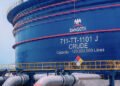


The Nigerian National Petroleum Company Limited (NNPCL) and major oil marketers are in talks to eliminate petrol imports by leveraging local production, particularly from the Dangote Refinery.

Discussions on this strategic shift were held during a meeting organized by NNPCL’s Group Chief Executive Officer, Mele Kyari, and the Nigerian Midstream and Downstream Petroleum Regulatory Authority (NMDPRA) at the NNPCL Towers in Abuja.
The meeting included representatives from the Major Oil Marketers Association of Nigeria (MOMAN), the Depot and Petroleum Products Marketers Association of Nigeria (DAPPMAN), and key stakeholders from companies such as 11 Plc, Matrix Energy, and AA Rano.
According to “Sunday PUNCH”, the discussions reflect growing confidence in the Dangote Refinery’s ability to meet Nigeria’s domestic fuel demand while addressing the need to reduce reliance on imports.
A major marketer who attended the meeting revealed that the discussions are ongoing and yet to be finalized.
“To the best of my knowledge, the discussion has not been concluded.
The information in circulation was leaked.
Until all stakeholders are carried along and a consensus is reached, no formal announcement will be made,” the source stated.
Key points, including agreements with local refineries, remain unresolved.
Stakeholders are expected to reconvene once outstanding issues are addressed.
Another official at the meeting confirmed that NNPCL emphasized that petrol imports by marketers would require specific clearance tied to the Dangote Refinery’s capacity.
While the move is aimed at fostering local production, it has raised concerns among marketers about the refinery’s ability to consistently meet Nigeria’s fuel demands.
A contentious issue in the discussions is Dangote Refinery’s proposed payment structure.
Unlike the current system, where marketers pay after product delivery, the refinery demands advance payments.
“Paying upfront significantly increases financial pressure on marketers, especially smaller players with limited capital.
For decades, we’ve operated on a post-delivery payment model, which better suits our liquidity cycles,” a stakeholder noted.
While the shift to domestic refining could strengthen Nigeria’s energy security, stakeholders are calling for careful planning and consensus-building to address logistical, financial, and operational concerns.